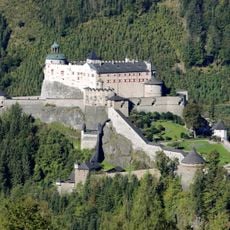
Hochkönig, Alpine summit in Sankt Johann im Pongau District, Austria.
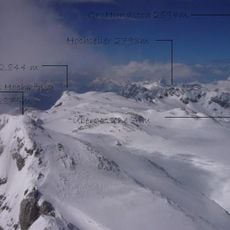
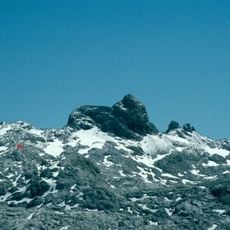
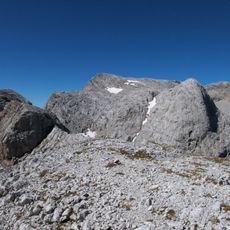
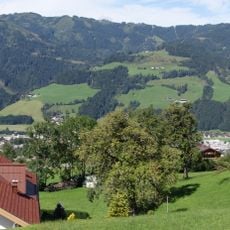
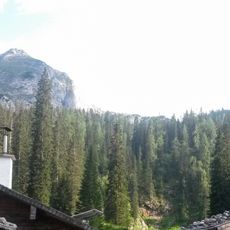
Hochkönig is the highest massif of the Berchtesgaden Alps, reaching 2,941 m. Its summit plateau is ringed by an almost circular chain of peaks, including Hochseiler, Lammkopf and Torsäule. The plateau holds the Übergossene Alm glacier, which had shrunk to less than 0.2 km² by 2023. The mountain rises above green slopes and dark forest, with pale grey rock and snow patches along the summit ridge.
The first documented tourist ascent took place in 1826, marking the start of recreational mountaineering on this peak. Since then, the mountain has drawn climbers and hikers from around the world.
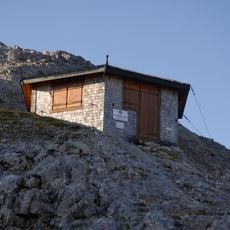
The name Hochkönig means "high king", a reference to the massif towering over the surrounding peaks rather than to any medieval origin. Since 1898 the Österreichischer Touristenklub has kept a hut on the summit; the present Matrashaus dates from 1985 and sleeps nearly one hundred mountaineers. Since 2015 the Hochkönigman trail marathon has been held annually in the area around the mountain.
Most routes start from mountain huts in surrounding valleys and ascend over several hours to reach the peak. Sturdy footwear and good fitness are necessary since the paths become steep, especially in the upper sections.
The plateau glacier, the Übergossene Alm, lies at 2,600 to 2,700 metres and is now split-free but shrinking fast: from about 5.5 km² in 1888 to under 0.2 km² by 2023, a loss of roughly 6.2% a year. The summit itself, at the southern edge of the plateau, is a first-order trigonometric point.
The community of curious travelers
AroundUs brings together thousands of curated places, local tips, and hidden gems, enriched daily by 92,773 contributors worldwide.