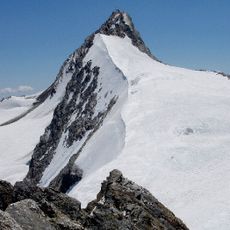
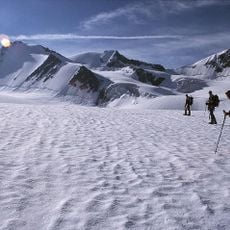
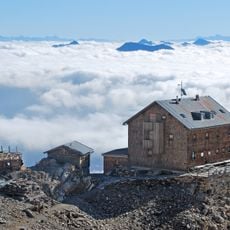
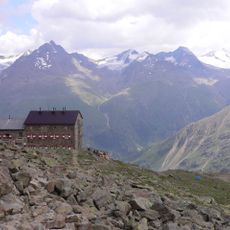
Gurgler Glacier, Glacier in the Ötztal Alps, Tyrol, Austria
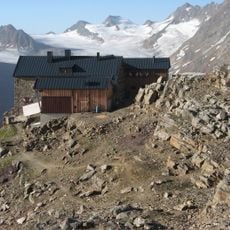
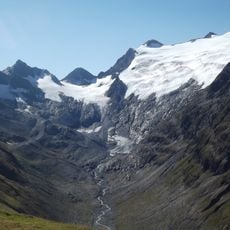
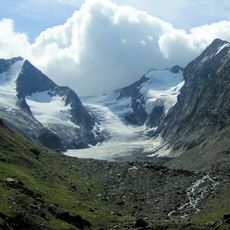
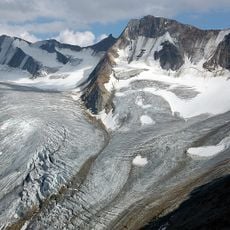
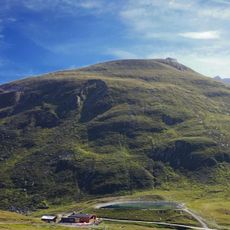
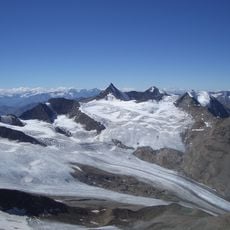
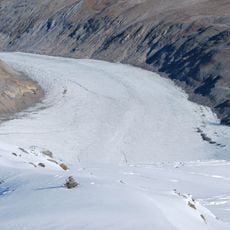
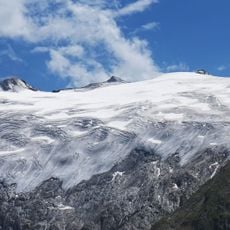
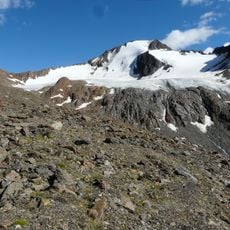
Gurgler Glacier is a valley glacier in the Ötztal Alps that flows about eight kilometres north from the Gurgler Kamm into the Gurgler Tal. It lies between the Ramolkamm with the Schalfkogel to the west and the Schwärzenkamm to the east, with the Hochwildehaus on its right bank. In 1999 it covered 9.58 km², making it then the third-largest glacier in Tyrol.
The ice field formed thousands of years ago through the buildup and slow movement of snow in high alpine conditions. Like many European glaciers, it has shrunk in size and thickness over the past century.
The glacier's outburst floods shaped life in the Ötztal: when the ice reached Langtalereck, meltwater from the Langtaler Ferner was dammed into the Gurgler Eissee, a lake of up to 4 km². Its sudden emptying devastated the Gurgler Tal and Ötztal in 1717 and 1770. A 1989 monument in Obergurgl commemorates Auguste Piccard's and Paul Kipfer's balloon landing and their rescue by mountaineers led by Hans Norman Falkner.
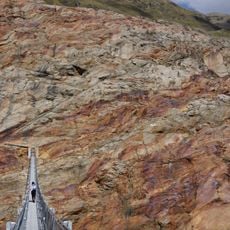
The glacier is reached on foot from Obergurgl via the Gurgler Tal, with the Hochwildehaus on its orographically right bank serving as a base. The Piccard Bridge, built in 2017 where the ice has now melted away, marks the area of the 1931 balloon landing. Alpine Club map sheet 30/1 Ötztaler Alpen, Gurgl, at 1:25,000 covers the route.
On 27 May 1931 Auguste Piccard and Paul Kipfer landed their balloon on the glacier after setting a height record; the aluminium gondola was left behind and became a tourist attraction before being hauled away in April 1932. A monument in Obergurgl and the Piccard Bridge, built in 2017 where the ice has now melted away, recall the landing.
The community of curious travelers
AroundUs brings together thousands of curated places, local tips, and hidden gems, enriched daily by 92,892 contributors worldwide.