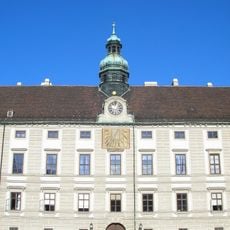
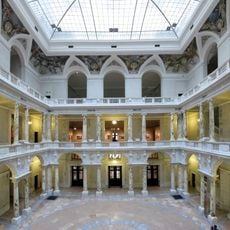
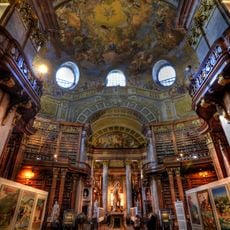
Papyrus Collection of the Austrian National Library, Ancient document museum at Hofburg Palace, Vienna, Austria.
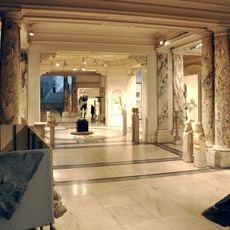
The Papyrus Collection of the Austrian National Library in the Neue Burg wing displays more than 180,000 ancient objects from Egypt, Greece, and the Near East. The items include written papyri, mummy labels, inscriptions, and original documents from various ancient civilizations.
Archduke Rainer donated his private collection to Emperor Franz Joseph I in 1899, creating one of the world's most extensive papyrus collections. The collection was expanded over decades and now documents nearly three millennia of ancient written traditions.
The collection displays everyday writings from ancient Egypt: recipes, letters, agreements, and math exercises from different periods. These papers show how people organized their lives and what mattered to them back then.
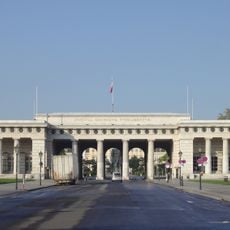
The collection and museum occupy rooms in the Neue Burg on Heldenplatz, in Vienna's first district. The permanent exhibition was redesigned in 2020/21 and now includes multimedia stations, a revised audio guide and an enlarged children's corner. The rooms are wheelchair accessible.
The core of the collection, the 1st Fayyum find of about 10,000 papyri, was bought by Archduke Rainer in 1883 and inscribed in UNESCO's Memory of the World register in 2001. The Arabic holdings, some 75,000 objects, form the largest closed collection of their kind worldwide.
The community of curious travelers
AroundUs brings together thousands of curated places, local tips, and hidden gems, enriched daily by 92,787 contributors worldwide.