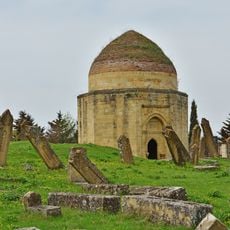
Diri Baba Mausoleum, Sufi mausoleum in Gobustan, Azerbaijan.
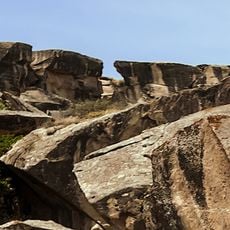
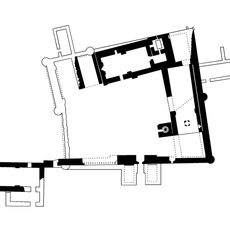
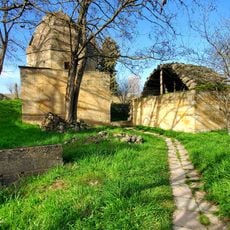
The Diri Baba Mausoleum is a two-storey building set into a cliff in Qobustan, with only its south facade exposed. The lower floor has a hall covered by an ogive and a small vestibule leading to an octagonal cupola; stairs carved into the rock connect to the upper hall, whose spherical dome rests on squinches decorated with carved plant ornaments.
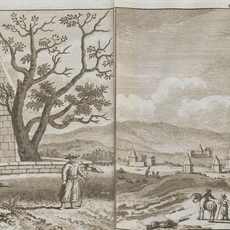
An inscription on the decorative band separating the floors records that the mausoleum was built in Hijri 805 (1402 CE) by order of Shirvanshah Sheikh Ibrahim. One squinch bears the architect's partial name, "the son of ustad Haji". The traveller Adam Oleari, envoy of the Holstein embassy in the 1630s, described and sketched the monument, as did the Dutch traveller Cornelius de Bruyn later in the 17th century.
The name Diri Baba, "the living Baba", comes from a legend that the Sufi sheikh buried here stayed alive for days after his death before his disciples found out. Pilgrims have come since the 17th century; the Ottoman traveller Evliya Çelebi described the saint's body as still fresh, like white cotton.
The mausoleum stands in Qobustan town, on the Baku–Shamakhi road, opposite an old cemetery. The main part is the upper storey, reached by a narrow stair cut inside the cliff, so expect a dim, tight climb. Visitors remove their shoes in the small octagonal corridor before the hall.
The structure appears to float directly out from the rock face, achieved through careful placement and the cliff's angle. This visual effect makes the building especially striking from certain viewpoints.
The community of curious travelers
AroundUs brings together thousands of curated places, local tips, and hidden gems, enriched daily by 94,516 contributors worldwide.