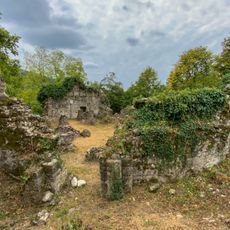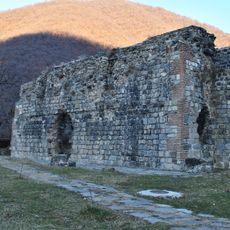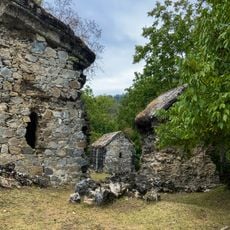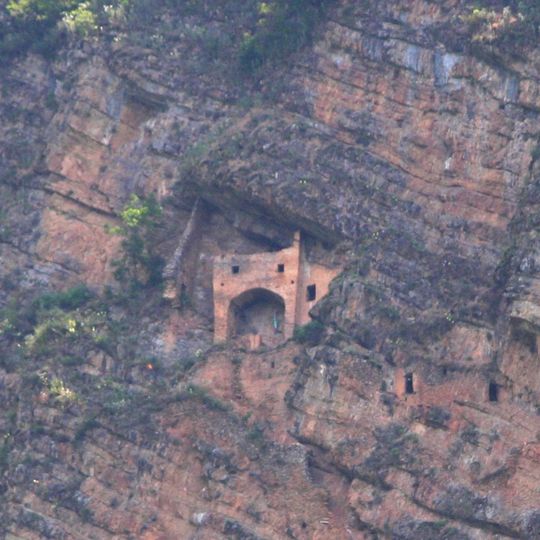
Parigala, Medieval fortress in Yuxarı Çardaxlar, Azerbaijan.
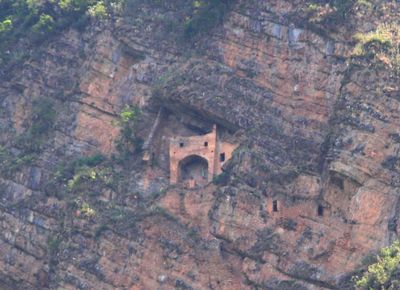
Parigala is a fortress cut into a cliff face about 300 metres above the ground, roughly 300 metres from Yuxarı Çardaxlar. Its flat reddish stone facade has a large central arch and two small square openings above; a stepped wall climbs the rock to the left, and a narrow vertical opening sits in the masonry to the right. Inside are three rooms, and a rock-cut path 1–1.5 metres wide leads up.
Parigala's construction date is disputed: some researchers place it in the 3rd–4th centuries, others in the 12th–13th centuries or the late 14th century under Emir Timur. Historian Muhammad Hajiahmadov links the name to the 8th-century Arab conquests. The fortress is a nationally significant architectural monument of Azerbaijan.
The name Pəriqala means "Fairy Fortress", from pəri (fairy) and qala (fortress). One legend says watchmen brought the village's brides, girls and children up here when an enemy approached, and the name honours the fortress that protected the el's fairies — its daughters. Another tells of a girl named Pəri who led the defence against Timur's troops in the late 14th century and threw herself from the rock rather than be taken.
To reach the fortress, visitors need assistance from local guides who know the way. The ascent involves climbing a 40-meter stairway made of oak beams with a covered walkway for protection.
The fortress is cut into the rock rather than built on it, and its total area is only about 30 square metres. A rock-hewn path 1 to 1.5 metres wide led to it, and its remains survive. Historian Muhammad Hajiahmadov held that water once reached the interior through reed pipes.
The community of curious travelers
AroundUs brings together thousands of curated places, local tips, and hidden gems, enriched daily by 94,328 contributors worldwide.