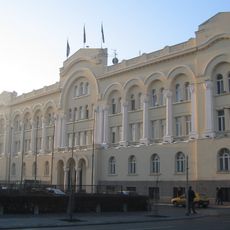
Banski Dvor, Cultural center in Banja Luka, Bosnia and Herzegovina.
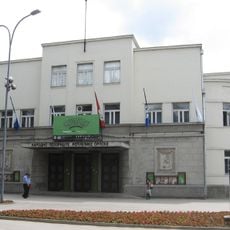
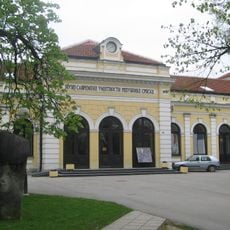
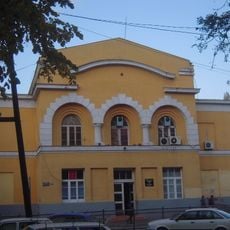
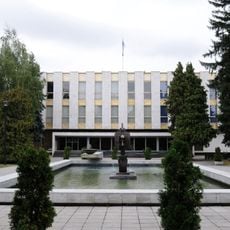
Banski Dvor is a cultural center in central Banja Luka, housed in a building that mixes Renaissance elements, academic classicism, and medieval decorative details in a single eclectic facade. Inside, several halls of different sizes are used for art exhibitions, concerts, literary events, and workshops.
The foundation stone was laid on 26 October 1930, and construction began in March 1931. The building opened on 8 November 1932 as the seat of the Vrbaska Banovina, whose first ban was Svetislav Tisa Milosavljević. A 1931 competition in Belgrade and Sarajevo newspapers was won by Jovanka Bončić-Katerinić, Anđelija Pavlović and Jovan Ž. Ranković. It later served as the seat of the President of Republika Srpska until 2008.
The name Banski Dvor means "palace of the ban", the title of the regional governor. Since 1998 it has been a public cultural institution, and before the 2008 reconstruction of the Palata Republike Srpske it housed the President of Republika Srpska. Its Great Hall, once used for dances, now hosts concerts and exhibitions.
The center sits in the middle of Banja Luka and is easy to reach on foot from most central points in the city. Since the program changes regularly, it is worth checking what is on before you visit.
Jovanka Bončić-Katerinić, who designed the building, was one of the first women to receive a major public commission in Yugoslavia. The building is also listed as a National Monument of Bosnia and Herzegovina, a status that protects its original fabric from alteration.
The community of curious travelers
AroundUs brings together thousands of curated places, local tips, and hidden gems, enriched daily by 93,365 contributors worldwide.