Great oak of Liernu, Protected oak tree in Liernu, Belgium.
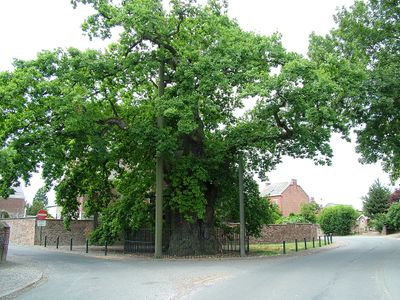
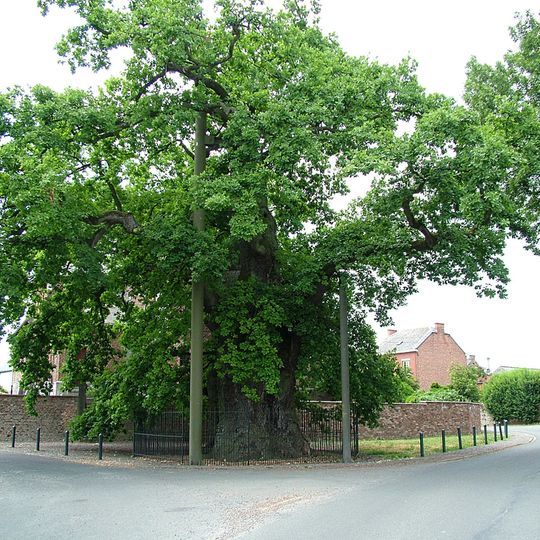
The Great Oak of Liernu is a pedunculate oak (Quercus robur) standing beside the church in Liernu, part of Éghezée, Namur province. Its trunk measures 14.65 m in circumference at the ground and 10.41 m at breast height (2003), making it Belgium's thickest oak. The massive, deeply ridged grey-brown trunk flares at the base and splits into heavy limbs high up; a thin dark support pole stands in front of it, behind a low brick wall and black metal fence.
The tree was probably planted in the late Middle Ages, though its hollow trunk makes exact dating impossible; estimates range from 600 to over 1,000 years. In 1838 an abbot placed a statue of Saint Anthony in the hollow, making it a pilgrimage site and saving it from being felled. It has been protected as a monument since 1939.
In 1838 an abbot placed an image of Saint Anthony in the hollow trunk, making the oak a pilgrimage site and saving it from felling. Villagers then kept the custom of placing two burning candles there to heal sick animals. The image was stolen in 1970. On 30 May 2015, three new oaks were planted in Liernu, recalling the Charlemagne legend and his title "Father of Europe".
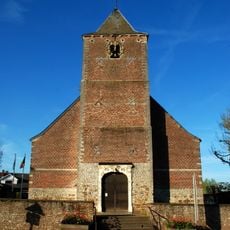
The oak stands beside the church in Liernu, in the municipality of Éghezée, Namur province. It rises behind a low brick wall and a black metal fence, with a thin support pole in front of the trunk. Approach on foot from the village centre; the tree is a short walk away.
In 1838 an abbot placed an image of Saint Anthony inside the hollow trunk, which saved the oak from being felled. Villagers then set two burning candles there to heal sick animals; the image was stolen in 1970. In 2016 the tree represented Belgium in the European Tree of the Year contest.
The community of curious travelers
AroundUs brings together thousands of curated places, local tips, and hidden gems, enriched daily by 94,237 contributors worldwide.