Carolus Magnus, statue in Liège, Belgium
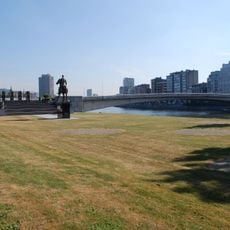
The Carolus Magnus monument is a bronze equestrian statue of Charlemagne on a stone pedestal at the crossing of Boulevard d'Avroy and Boulevard Piercot. The rider wears a chlamys and tunic with a short sword at his side, his right arm extended outward. The pedestal's niches hold six bronze statuettes of his ancestors, among them Pepin the Short and Charles Martel. The whole monument reaches 12 m, the statue alone 5 m.
Louis Jehotte proposed a Charlemagne monument to Liège in 1855, echoing the young Belgian nation's search for national heroes. The city endorsed it in 1860, first chose Place Saint-Lambert, then in 1863 moved it to the crossing of Boulevard d'Avroy and Boulevard Piercot; Jehotte lost his court challenge. He completed the bronze in his Brussels workshop in 1867, and it was inaugurated on 26 July 1868 before Governor Charles de Luesemans. Vandalism damaged three pedestal statues in 1888; the monument was restored in 2011–2012.
Charlemagne entered local folklore through guesses that he was born between Jupille and Herstal, and his dialogue with Tchantchès, the Liège puppet, is a well-known piece of local tradition. The monument also honours six of his ancestors from the Liège region, including Pepin of Herstal and Charles Martel.
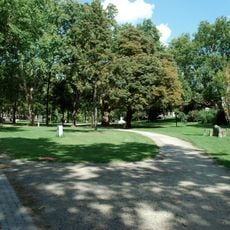
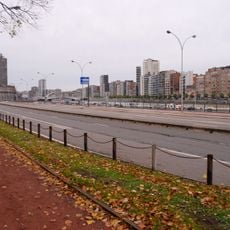
The monument sits at a central, busy intersection and is easily reached on foot from main parts of Liège. The surrounding park offers benches and green space where visitors can rest, especially during warmer months.
The pedestal of the monument features carved reliefs of Charlemagne's ancestors, including his father Pepin the Short and grandfather Charles Martel, showing how the artist stressed the local significance of this family line. These details are often overlooked by visitors focused only on the mounted figure above.
The community of curious travelers
AroundUs brings together thousands of curated places, local tips, and hidden gems, enriched daily by 94,405 contributors worldwide.