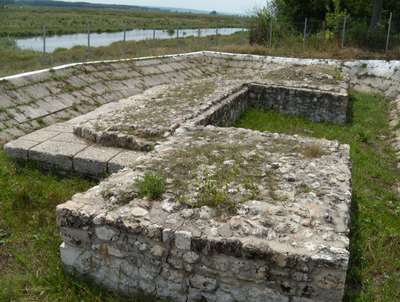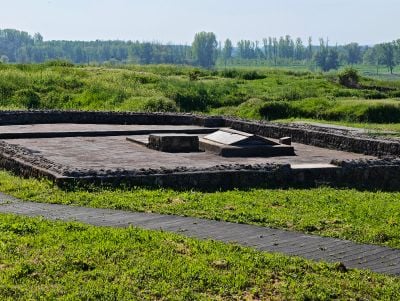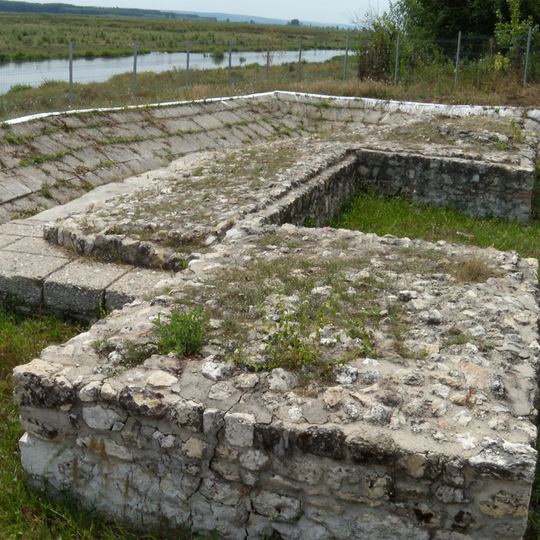
Constantine's Bridge, Roman bridge across Danube in Corabia, Romania.
Constantine's Bridge was a river crossing that spanned the Danube, connecting the Roman fortress of Sucidava with the town of Oescus in what is now Bulgaria. The structure stretched approximately 2,400 meters in length and rose about 33 feet (10 meters) above the water level.
Emperor Constantine the Great ordered the construction of this bridge to strengthen Rome's grip on the Danube frontier. It became a crucial link in the empire's defensive and trade networks along one of its most important borders.
The bridge symbolized Roman engineering prowess and imperial authority to the ancient world. It linked two key military strongholds and made the movement of troops and trade goods between them a regular part of frontier life.
The bridge was built with a combination of wood and stone pillars anchored to both riverbanks and required regular maintenance to withstand seasonal floods. Its construction and upkeep involved moving vast amounts of building materials and organizing substantial labor forces.
The central section of the bridge crossed the river without any supports and stretched about 1,100 meters, a feat that pushed the limits of ancient engineering. This uninterrupted span made it a technical marvel of its era.
The community of curious travelers
AroundUs brings together thousands of curated places, local tips, and hidden gems, enriched daily by 92,294 contributors worldwide.