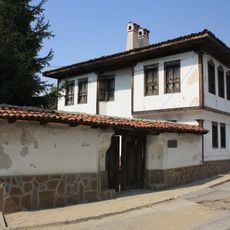
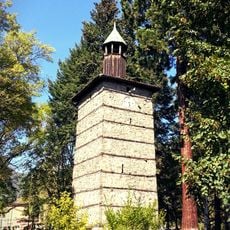
Teteven Monastery, Medieval monastery in Teteven, Bulgaria
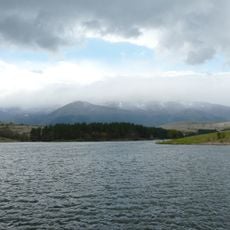
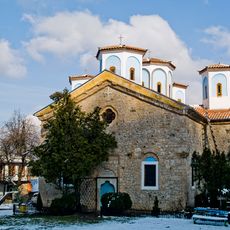
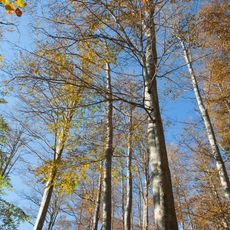
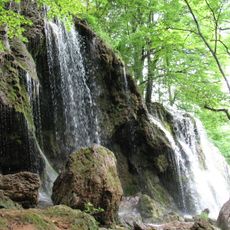
Teteven Monastery stands at the foot of the Balkan Mountains surrounded by deep valleys, forests, and streams near the Vit River. The complex comprises multiple buildings arranged together as a functioning religious center within this mountain setting.
Founded by tradition in the 11th century, the monastery was already documented by 1600 in a liturgical book now kept at the National Church Historical and Archaeological Museum in Sofia. A wall inscription records that the Turks burned and plundered Teteven in 1779, yet the monastery survived. Before the Liberation it housed a cell school and library and was visited by national liberation activists.
The church preserves two layers of wall painting: 17th-century frescoes in the altar area and 19th-century work inside the nave, possibly unfinished work by Ivan Dospevski. The 19th-century iconostasis was carved by Teteven or Tryavna masters who also made the iconostasis in the St Nicholas chapel of Troyan Monastery; the royal doors in both are identical. The 18th-century icons of St Elijah, Christ Pantocrator, John the Baptist, Sts Constantine and Helena, and the Archangel Assembly are highly valued.
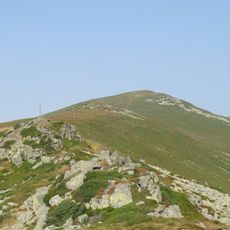
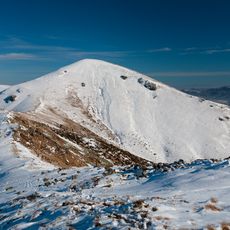
The monastery serves as a starting point for several hiking trails that lead into the Teteven Balkans and Central Balkan National Park. Its mountain location makes it convenient for exploring the surrounding area on foot.
An inscription on the church records that in 1779 the Turks burned and plundered Teteven, yet the monastery survived. The same church holds a 19th-century iconostasis whose carvers also made the one in the St Nicholas chapel of Troyan Monastery, with identical royal doors in both.
The community of curious travelers
AroundUs brings together thousands of curated places, local tips, and hidden gems, enriched daily by 93,604 contributors worldwide.