Hudson Bay, Epicontinental sea in northeastern Canada
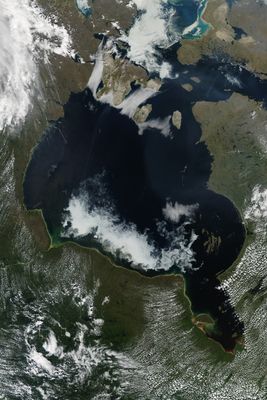
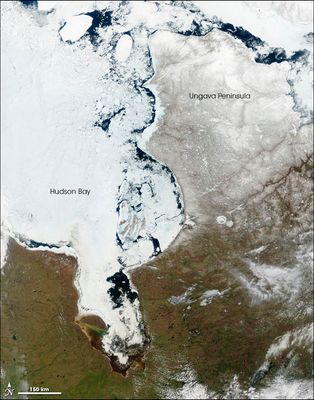
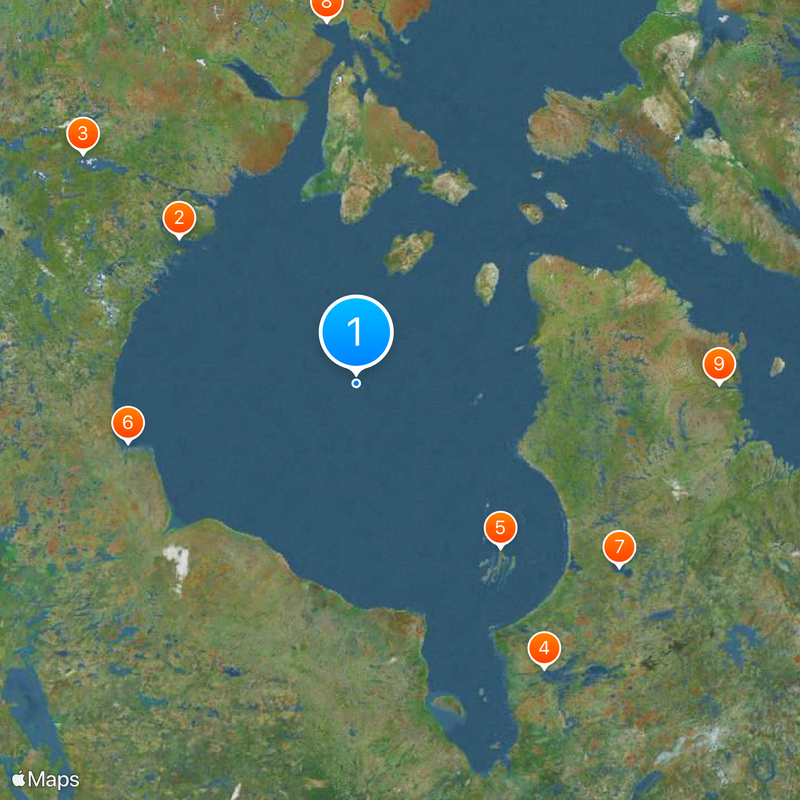
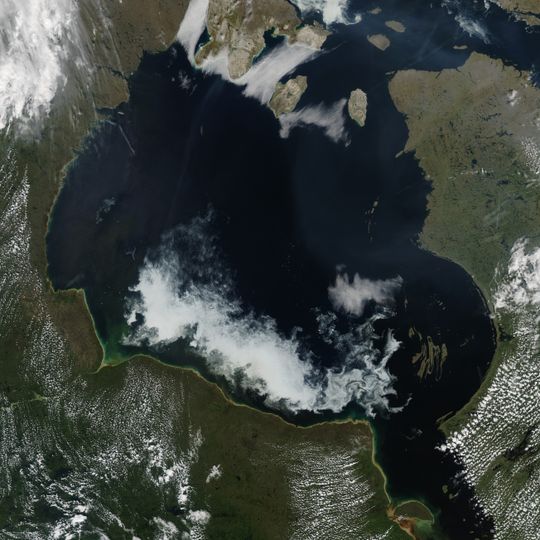
Hudson Bay is an epicontinental sea in northeastern Canada, covering more than one million square kilometers and connecting to the Arctic Ocean through Foxe Basin and to the Atlantic via Hudson Strait. Its coastline runs through four provinces and territories, bordered by flat tundra landscapes, rocky outcrops, and extensive wetlands that stretch far inland from the shore.
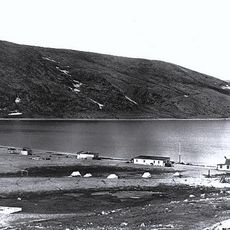
English explorer Henry Hudson reached these waters in 1610 while searching for a Northwest Passage, only to vanish after a crew mutiny the following year. In the centuries that followed, the bay became a center for the fur trade, with European trading companies establishing numerous coastal posts to organize commerce with indigenous peoples across the region.
Inuit communities along the coastline rely on these waters for fishing, seal hunting, and transport between settlements that have endured for generations. These traditional practices shape daily life in remote villages, where small boats and snowmobiles remain the primary means of movement across ice and open water.
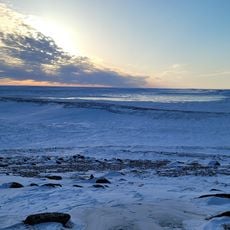
The waters remain frozen for roughly half the year, with ice typically blocking maritime access from November through July and limiting ship movement to a narrow summer window. Access to coastal communities relies mainly on air travel or occasional boat service during the brief ice-free months, as no continuous roads connect the region to southern Canada.
The shoreline holds Canada's largest continuous peatland, stretching across thousands of kilometers and forming one of the oldest landscape features on the continent. Each year, roughly 20,000 beluga whales pass through the western waters, where the animals gather in shallow, warmer currents to calve and shed their skin.
The community of curious travelers
AroundUs brings together thousands of curated places, local tips, and hidden gems, enriched daily by 92,641 contributors worldwide.