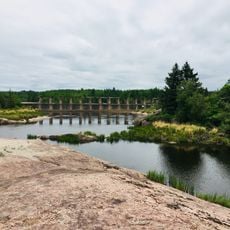
Greater Winnipeg Water District aqueduct, Water infrastructure system in Manitoba and Ontario, Canada
The Greater Winnipeg Water District aqueduct is a concrete conduit extending about 154 kilometers from Shoal Lake to the city, delivering approximately 390 million liters of water daily to the region. The system relies on gravity to move water through its channel, requiring no pumps along most of its route.
Construction started in 1914 under chief engineer W.G. Chace, with water reaching Winnipeg for the first time in 1919. The project represented a major engineering achievement of its era, requiring innovative techniques to transport water across such a long distance.
The aqueduct has served as a shared water source for multiple communities surrounding Winnipeg since its completion, connecting towns that once relied on separate local supplies. This shared system shaped how the region grew and developed as a unified area.
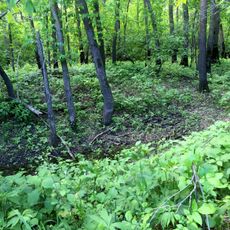
The aqueduct runs mostly underground but has access points for maintenance and inspection scattered along its route. Visitors cannot walk inside the structure, but can view portions of it from the surface at various locations near the conduit.
The concrete conduit features a parabolic arch design that maintains structural strength without steel reinforcement, even while crossing beneath seven rivers. This construction method was unusual for its time, demonstrating that concrete alone could provide the needed durability.
The community of curious travelers
AroundUs brings together thousands of curated places, local tips, and hidden gems, enriched daily by 91,620 contributors worldwide.