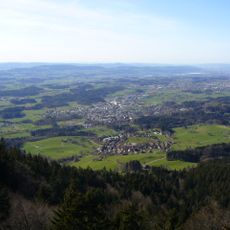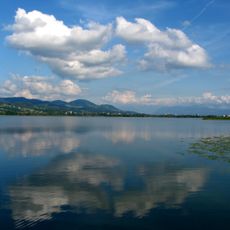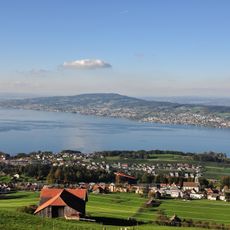
Lake Zurich, Alpine lake in Zurich, Switzerland
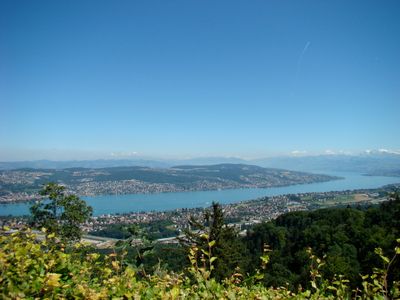
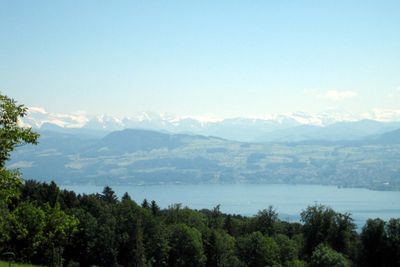
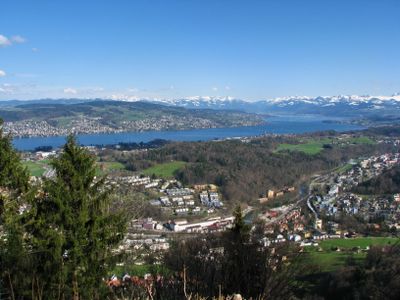
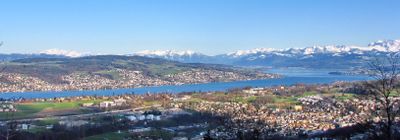
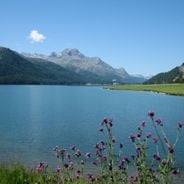
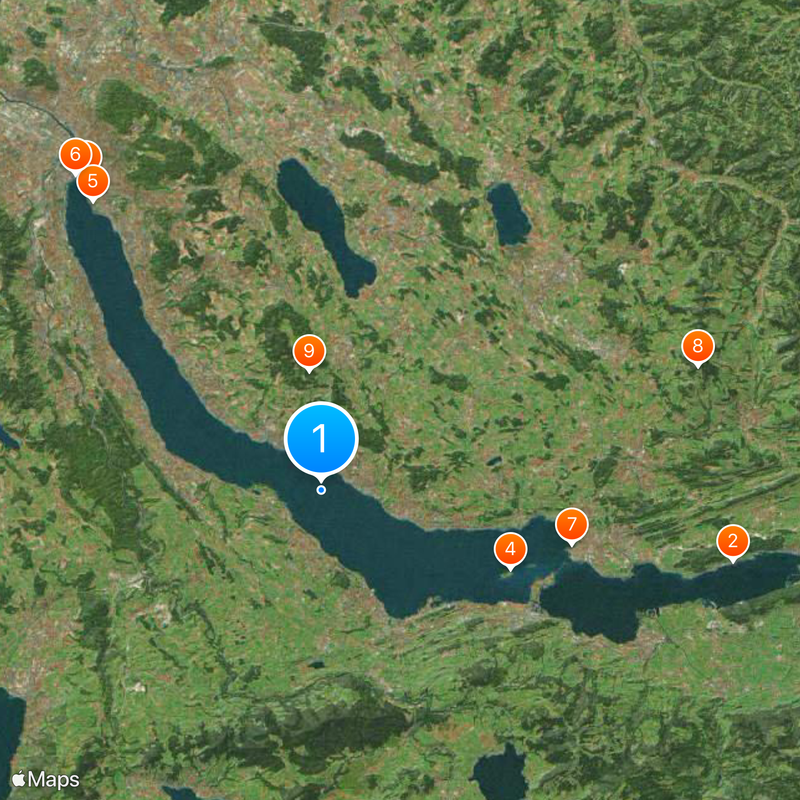
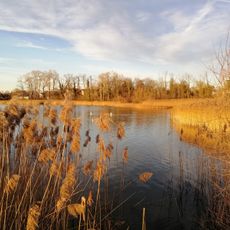
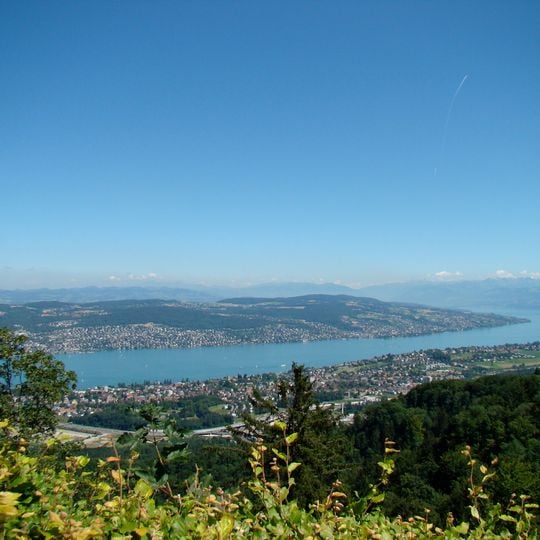
Lake Zurich is an Alpine lake in Switzerland that stretches southeast from the city of Zurich across three cantons. Between its northern and southern ends lie roughly 40 kilometers (25 miles), while the widest point measures about three kilometers (two miles) and the deepest zone reaches 136 meters (446 feet) below the surface.
The basin was carved by the Rhine-Linth glacier during the last Ice Age, and its northern end is closed by a moraine wall from the Zurich stage, about 20,000 years ago. The Linth originally flowed straight into the lake until the Escher canal (1811) diverted it into Lake Walen and the straightened Linth canal (1816) returned it near Schmerikon. Until the early 16th century, Lake Tuggen lay upstream of the Obersee before silting up.
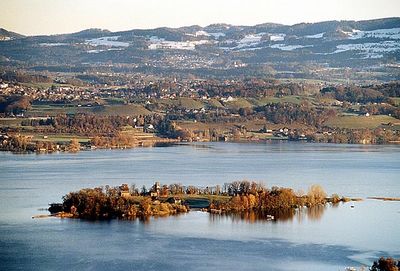
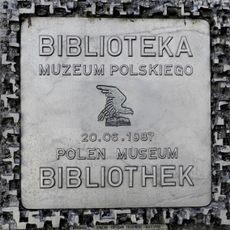
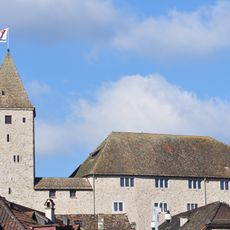
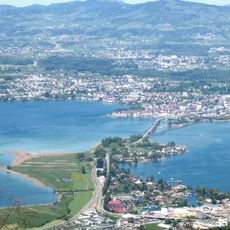
The lake's name appears as Zürisee in local Alemannic usage. On the Hurden peninsula, the Holzbrücke Rapperswil-Hurden is a wooden pedestrian bridge crossing the lake; a predecessor stood here in the Middle Ages. Rapperswil's castle houses a Polish museum, founded by Polish exiles in the 19th century.
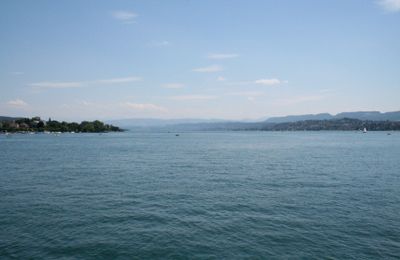
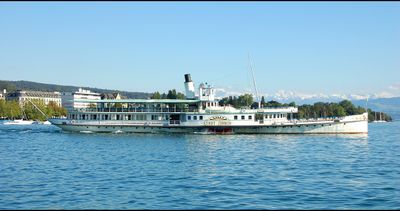
Visitors wishing to explore the shoreline find access points in several settlements along the water, where public paths and lawns lead down to the shore. Most waterfront sections can be followed on foot or by bicycle, while boats run regularly between larger docks and also call at smaller harbors.
Below the surface lie the remains of nine prehistoric pile dwellings that were built thousands of years ago along the shallow edges of the water. These submerged settlement structures belong to a UNESCO World Heritage listing and offer insight into the lives of early communities who lived here by the shore.
The community of curious travelers
AroundUs brings together thousands of curated places, local tips, and hidden gems, enriched daily by 94,584 contributors worldwide.