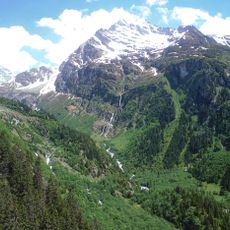
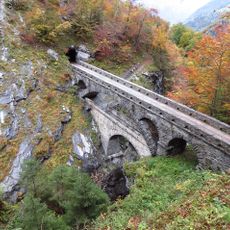
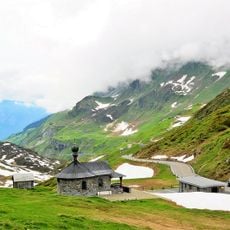
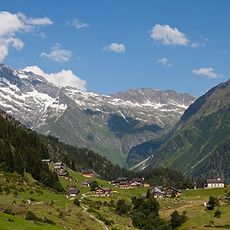
Tödi, Mountain peak in Grisons and Glarus, Switzerland
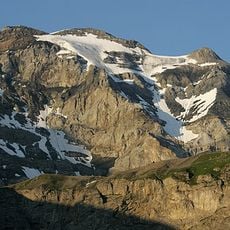
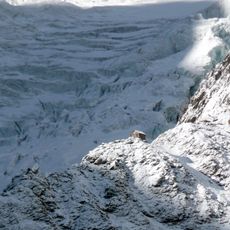
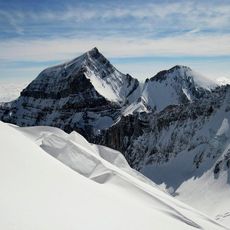
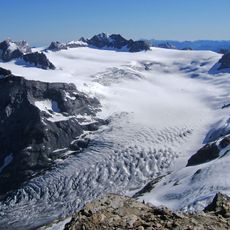
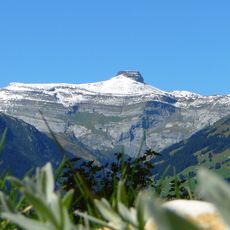
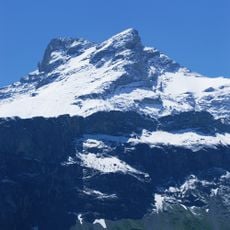
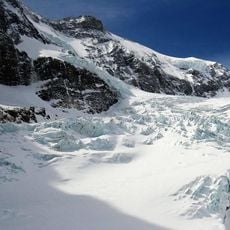
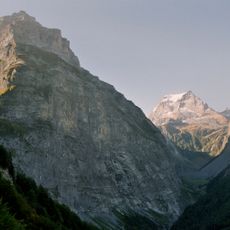
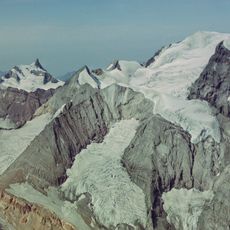
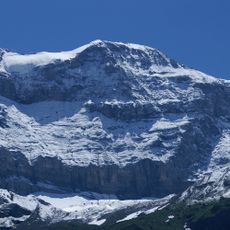
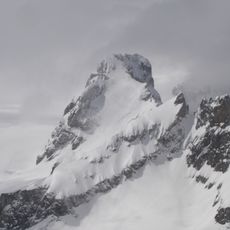
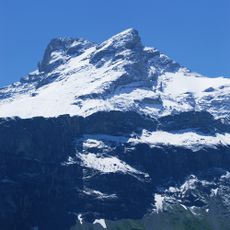
The Tödi is a heavily glaciated mountain massif whose highest summit, Piz Russein, reaches 3,612 metres on the border of Glarus and Grisons. Its three main peaks are Piz Russein (west), Glarner Tödi (east, 3,570 m) and Sandgipfel (north, 3,390 m). The Biferten Glacier, 4 km long and heavily crevassed, descends east from the summit, while the Rötidolomit forms a striking 50-metre red-yellow band near the top.
Placidus a Spescha, a Benedictine monk from Disentis (1752–1833), made several attempts on the Tödi around 1800. On 1 September 1824, aged and unable to reach the top himself, he watched from the Porta da Spescha as the chamois hunters Augustin Bisquolm and Placi Curschellas completed the first ascent from the Val Russein side.
The name likely derives from the Swiss German "d'Ödi", meaning desolate, uninhabited land. The Grünhorn, a rock spur above the Biferten Glacier, held the Swiss Alpine Club's first hut, founded in 1863 when the club chose the Tödi and Clariden region as its first exploration area; the hut now serves as a museum.
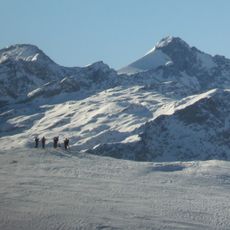
The normal route starts at the Fridolinshütte (2111 m) above Linthal and crosses the Bifertenfirn, a 4 km glacier with many crevasses, via the Gelbe Wand to the Piz Russein summit. The easier ascent runs from the south via the Punteglias-Hütte and the Porta da Gliems. The Grünhornhütte, the SAC's first hut, now serves only as a museum.
The glacier route demands technical ice climbing skills and presents significant crevasse fields and steep ice slopes. This challenging path attracts mountaineers seeking to practice advanced alpine techniques.
The community of curious travelers
AroundUs brings together thousands of curated places, local tips, and hidden gems, enriched daily by 92,893 contributors worldwide.