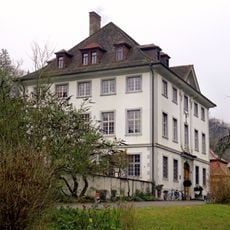
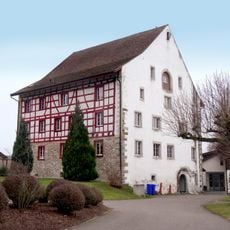
Schiener Berg, Mountain ridge between Konstanz, Germany and Stein am Rhein, Switzerland
Schiener Berg is a ridge of the Southwest Hegau Uplands between Horn in Germany and Stein am Rhein in Switzerland, reaching 716.9 m at an unnamed summit near Ferdinandslust. It is built of Upper Freshwater Molasse capped by glacial gravels, with a steep northern drop of 250–300 m above the Untersee and a southern slope falling in terraces toward the lake.
The name derives from the medieval settlement of Schienen, which emerged as a central point in the region during the Middle Ages and gave the mountain its identity. The village remained linked to the surrounding landscape as people moved goods and traveled across these higher elevations.
The mountain draws hikers from both countries who gather on trails and at viewing points throughout the year, creating a shared outdoor space between German and Swiss communities. This cross-border tradition has made the summit a place where people from different regions meet and explore together.
The ridge is bounded by Schienen in the centre, Horn and Gaienhofen on the Untersee side, and Stein am Rhein and Hemishofen in Schaffhausen. The northern slope drops 250 to 300 m to the Hegau-Untersee basin, while the southern slope falls in terraces toward the lake. The 41.96 km² Schienerberg landscape protection area, designated in 1954, covers most of the wooded ridge.
The ridge is built mainly of Upper Freshwater Molasse layers topped by Ice Age gravels cemented into Nagelfluh conglomerate. Its northern scarp, 250 to 300 m above the Untersee, follows the Schienerberg Fault, part of the Freiburg–Bonndorf–Bodensee fault zone, which dropped the northern beds by about 100 m.
The community of curious travelers
AroundUs brings together thousands of curated places, local tips, and hidden gems, enriched daily by 94,464 contributors worldwide.