Mount Nimba Strict Nature Reserve, Nature reserve and UNESCO World Heritage Site in Guinea and Ivory Coast
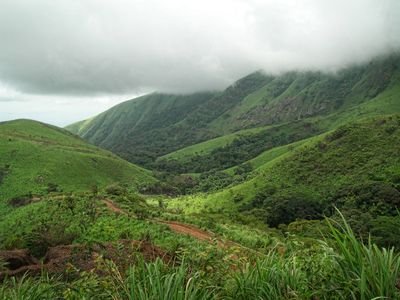
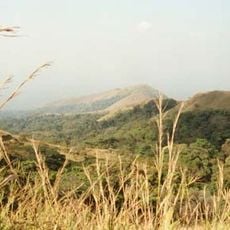
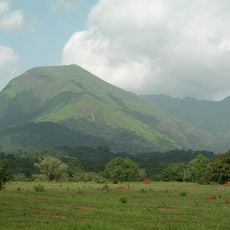
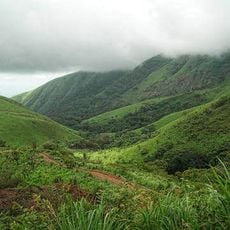
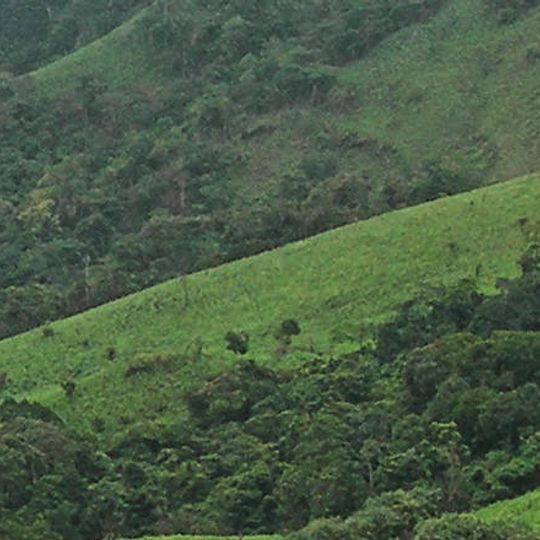
Mount Nimba Strict Nature Reserve is a protected area straddling the border between Guinea and Ivory Coast, featuring mountains, dense forests, and grasslands at higher elevations. The terrain rises steeply across multiple zones, each supporting different plant and animal communities adapted to their specific altitude and conditions.
Côte d'Ivoire classified the forest on 13 December 1943 by Order No. 4190 SE/F, and Guinea made it a strict nature reserve by decree on 5 July 1944, the first integral reserve of French West Africa. The Guinean part became a biosphere reserve in 1980. UNESCO listed the site in 1981 for Guinea and 1982 for Côte d'Ivoire, and iron-ore exploration from 1992 placed it on the danger list.
The reserve's name comes from the Nimba Range, whose peaks include Mount Richard-Molard, the highest point of both Guinea and Côte d'Ivoire at 1,752 m. The nearest towns and villages are Bossou, N'Zoo and Doromou. The reserve is a water tower with about fifty springs, including the sources of the Cavally, Cestos and Sassandra Rivers.
Entry requires permits from the responsible authorities, and visitors should prepare for changing weather and uneven terrain. Guided tours are available to help you navigate safely through the area and observe its wildlife.
The Nimba viviparous toad (Nimbaphrynoides occidentalis) lives only in the high-altitude grasslands above roughly 1,200 m, where it bears live young rather than laying eggs. The Lamotte's roundleaf bat is known from a single mining site in the reserve. The reserve also shelters western chimpanzees that use stones as tools.
The community of curious travelers
AroundUs brings together thousands of curated places, local tips, and hidden gems, enriched daily by 92,774 contributors worldwide.