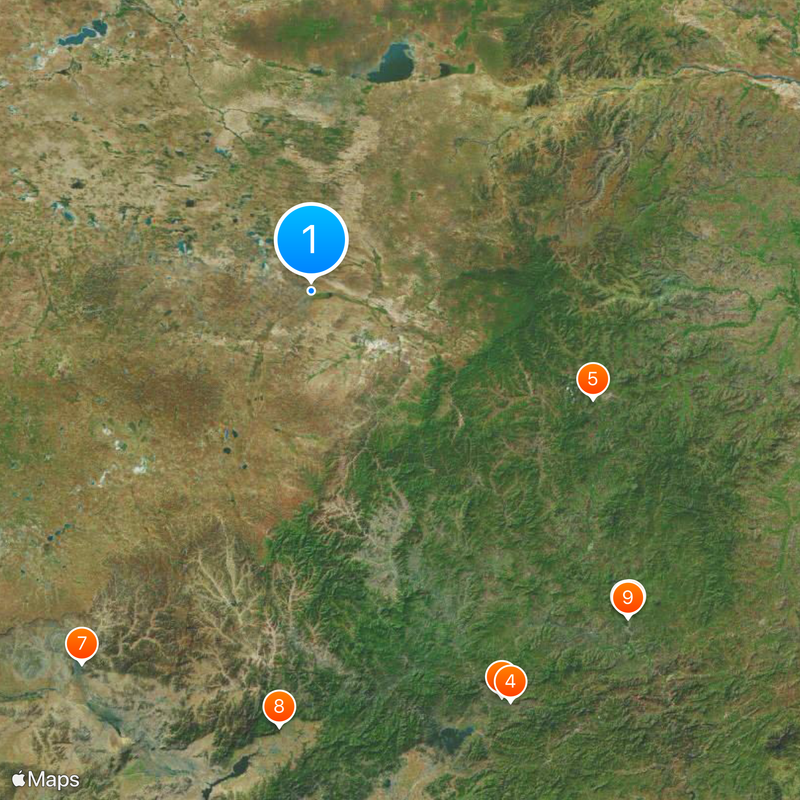
Xanadu, Archaeological site in Duolun County, China.
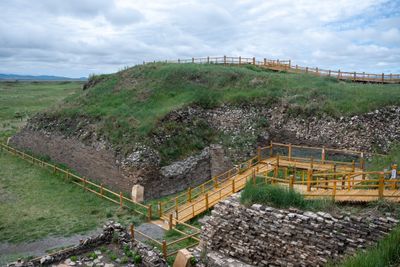
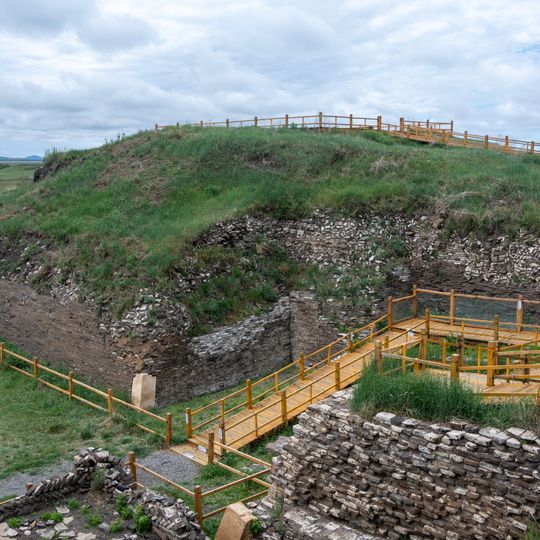
Xanadu is an archaeological site in Duolun County, Inner Mongolia, that once served as the northern summer capital of the Yuan realm. The remains show three nested zones surrounded by low stone walls that stretch across grassy terrain.
Kublai Khan ordered the city built in 1256 as a summer residence, from where he later governed the entire Yuan realm. After the dynasty fell, the complex was abandoned and decayed over the centuries into the present ruins.
The name derives from the Mongolian "Shangdu," meaning "upper capital," reflecting its role as the imperial summer residence. Visitors today can still trace the palace foundations, which show how Mongolian rulers combined Chinese building traditions with elements from the steppe.
The site lies in open steppe country with little shade, so visiting during moderate temperatures works best. The onsite museum helps visitors make sense of the faint outlines and structures that remain.
The English poet Samuel Taylor Coleridge wrote a famous poem about this city in 1797, even though he never saw it himself. His romantic vision made the name known in Western literature and shaped the European image of the distant East.
The community of curious travelers
AroundUs brings together thousands of curated places, local tips, and hidden gems, enriched daily by 91,706 contributors worldwide.