Changbai Mountains, Mountain range spanning Northeast China and North Korea.
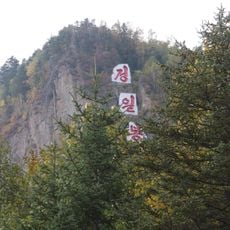
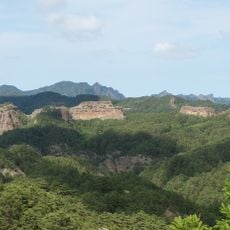
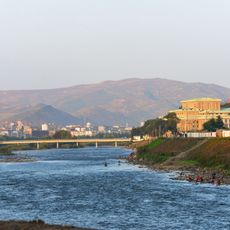
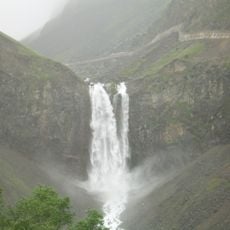
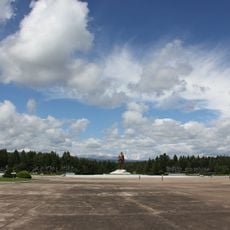
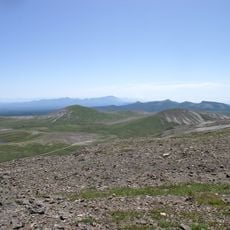
Changbai Mountains is a mountain range spanning the border between China and North Korea, featuring numerous peaks with significant elevation throughout the system. The landscape presents varied terrain including valleys, forested slopes, and high alpine zones that change dramatically with altitude.
The range is recorded in the Classic of Mountains and Seas as Buxian Shan, in the Book of the Later Han as Shanshan Daling, and in the New Book of Tang as Taibai Shan. The name Changbai Shan came into use under the Khitan Liao dynasty (916–1125) and continued under the Jurchen Jin (1115–1234). The Qing imperial family regarded it as the mythical birthplace of Bukūri Yongšon, ancestor of Nurhaci.
The Chinese name Changbai Shan, meaning 'Perpetually-White Mountain Region', was first used under the Liao dynasty and later by the Jurchen Jin. The range is the mythical birthplace of Bukūri Yongšon, ancestor of Nurhaci and the Aisin Gioro imperial family, who founded the Qing dynasty and regarded the mountains as their traditional homeland.
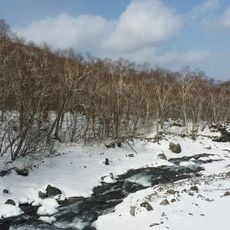
Access changes seasonally as heavy snow blocks higher elevations for extended periods and can make trails difficult or impassable. Visitors should prepare for variable weather conditions and bring appropriate gear for multiple climate zones encountered at different altitudes.
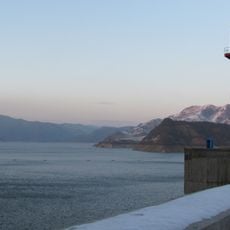
Paektu Mountain, the range's tallest summit at 2,744 m, holds Heaven Lake, a volcanic crater lake lying at 2,189.1 m. Five plant species grow in the water and 168 have been counted along its shores. The lake feeds the Songhua, Tumen and Yalu rivers, which all rise in these mountains.
The community of curious travelers
AroundUs brings together thousands of curated places, local tips, and hidden gems, enriched daily by 92,764 contributors worldwide.