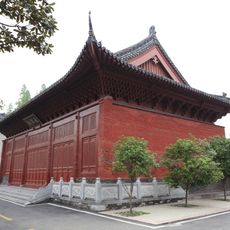
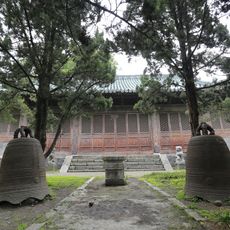
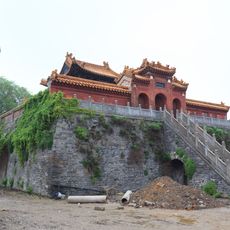
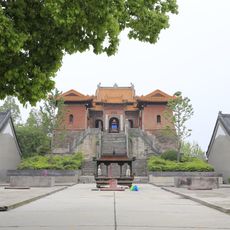
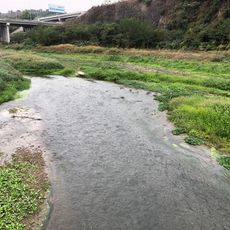
Chengtoushan, Archaeological site in Li County, China.
Chengtoushan is an archaeological site in Li County showcasing an ancient settlement with a circular layout enclosed by rammed earth walls and a surrounding moat. The location sits near the northwestern edge of Dongting Lake and contains foundations of early structures.
The site was discovered in July 1979 by Cao Chuansong, a cultural relics officer of Li County, during a county-wide survey. From 1991 to 2001 the Hunan Provincial Institute of Archaeology conducted systematic excavations, confirming it as the earliest and best-preserved Neolithic walled town found in China. The walls were built four times: first in the early Daxi culture, expanded twice during the Qujialing culture, and abandoned in the middle Shijiahe culture. It was named a National Key Cultural Relic Protection Unit in 1996 and opened as a national archaeological site park in 2016.
The name Chengtoushan means "city-head hill," referring to the raised walled mound above the surrounding plain. The site is also known for its pottery workshops, where excavators found ten kilns, and for burials including flexed and urn-coffin interments. A model of the site was the first exhibit in the China Pavilion at Expo 2010 in Shanghai.
Visitors should understand that this is a buried site displaying mostly exposed foundations and structural outlines requiring careful observation. The best time to explore is during drier months when pathways are more stable and visibility is clearer.
Excavations from 1991 to 2001 uncovered ten pottery kilns inside the walls, along with a burial zone holding flexed burials and urn coffins. A wooden paddle and boat stern found in the southern wall section point to water transport on the moat. The site was listed as a Major Historical and Cultural Site Protected at the National Level in 1996.
The community of curious travelers
AroundUs brings together thousands of curated places, local tips, and hidden gems, enriched daily by 92,869 contributors worldwide.