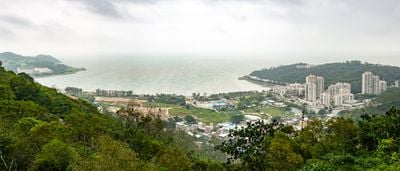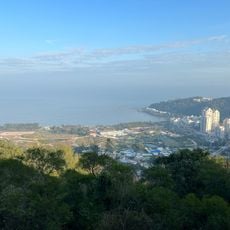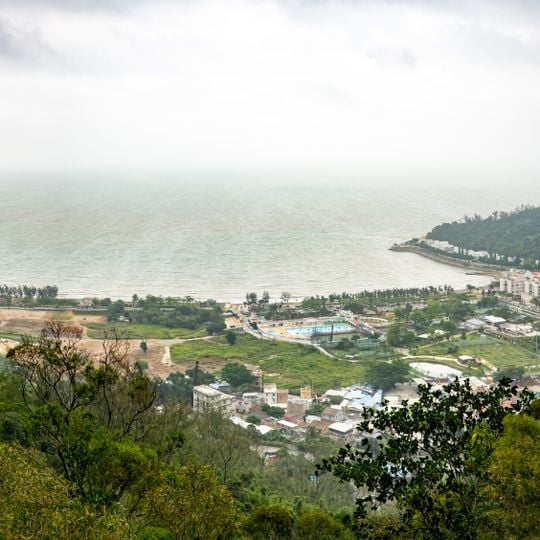
Hac Sa Beach, Natural sand beach in Coloane, China.
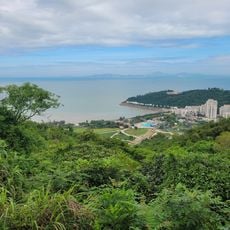
Hac Sa Beach is a 1,350-metre crescent of sand on the south side of Coloane Island, named for its black grains. The dark sand comes from glauconite washed ashore by currents; because erosion has shrunk the beach, the government has covered much of it with yellow sand, so the original black sand now shows mainly at the base and along the shore. A stream from Hac Sa Reservoir crosses the central area, and a casuarina plantation planted from the 1960s backs the sand.
The beach's name comes from dark minerals found in the seabed in earlier times. Yellow sand was later added to the existing beach to prevent further erosion and strengthen the shoreline.
The name Hac Sa is a Cantonese transliteration meaning "black sand", though the beach is now covered with yellow sand added to counter erosion. Nearby stands Hac Sa Village, a small fishing village over a century old. Visitors often call the beach "Hac Sa Wan", a name that does not appear on official maps and causes confusion with the Black Sand Ring area on the Macau peninsula.
The beach is easily accessible by public buses that stop nearby, making arrival straightforward for most visitors. Changing rooms, showers, and lifeguard stations are available throughout the swimming area.
A freshwater stream crosses through the beach, flowing from an inland reservoir to the sea. This creates an unusual mixing zone where fresh and salt water meet along the shoreline.
The community of curious travelers
AroundUs brings together thousands of curated places, local tips, and hidden gems, enriched daily by 92,784 contributors worldwide.