Lu Xun Park, Urban park in Hongkou, Shanghai, China
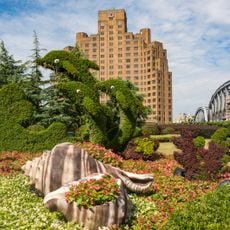
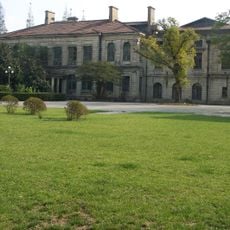
Lu Xun Park is an urban park in Shanghai featuring gardens, winding paths, lakes, and various recreational areas. The landscape follows traditional Chinese design with calm water features and planted hills that invite walking and rest.
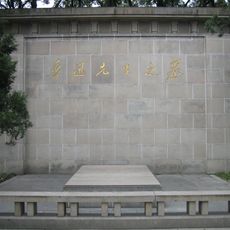
The Shanghai Municipal Council bought farmland beyond the settlement in 1896, partly for a rifle range, and laid out the park from 1901 to designs by the British horticulturist Stuckey, modelled on Glasgow's sporting parks. It opened partly in April 1906, was completed in 1909 and was renamed Hongkou Park in 1922. It hosted the second and fifth Far Eastern Games in 1915 and 1921, and in 1956 Lu Xun's coffin was moved here, turning it into a memorial park.
The museum inside displays personal items and works of the influential Chinese writer who shaped modern literature. Visitors can see his desks and original manuscripts that document his life and creative work.
The park is accessible via Lines 3 and 8 of Shanghai Metro, with Exit 1 at Hongkou Football Stadium Station providing direct access. Most paths are well-paved and relatively flat, making exploration comfortable.
In 1984, a Japanese youth delegation of 3,017 people from 220 organizations across all 47 prefectures visited China; about a thousand of them planted cherry saplings brought from Japan in the park with Shanghai youths. A memorial bell seat, inscribed by Wang Zhen with "Chinese and Japanese youth friendship for generations", marks the event.
The community of curious travelers
AroundUs brings together thousands of curated places, local tips, and hidden gems, enriched daily by 92,788 contributors worldwide.