Yinshan Mausoleum, Ancient royal burial complex in Keqiao District, China.
The Yinshan Mausoleum is a large earthen mound tomb on the summit of Yinshan Hill, with a 72 m east-west and 36 m north-south mound about 10 m high, surrounded by a 350 m moat with gates on all four sides. The rock-cut pit is 60 m long and 7 m deep, lined with layers of green clay and charcoal above a lacquered wooden chamber holding a log coffin.
Local tradition holds the tomb belongs to Yunchang, father of King Goujian of Yue. In 1995 surveyors confirmed a large artificial mound but found no proof of the occupant; a new looter's hole found on 5 April 1996 led to rescue excavation from August 1996. Digging ended in 1998, making it the first Yue royal tomb excavated in China. It became a national protected site in 2001.
Locals long called the mound Muke Dazong, after the Muke community that lived on the hill. The tomb itself is a timber structure: a 42 m outer chamber of lacquered square beams under a bark roof, with a coffin split from a single log. Excavators found only a small bronze bell with a wooden handle and two wooden rammers in the fill.
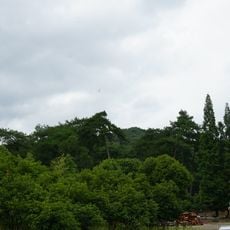
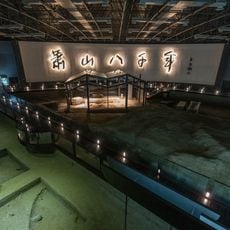
The tomb sits on the summit of Yinshan, reached on foot; the mound measures 72 m east-west and 36 m north-south, ringed by a moat 350 m long and 16-19 m wide. The protective hall completed in 2009 shelters the pit, where the wooden chamber and charcoal layers are visible. Sturdy shoes help on the slope.
The tomb chamber was cut from a single huge log, split lengthwise and hollowed out, then lacquered inside and out; it measures 6.2 m long and 1.15 m in diameter. The outer coffin was built of lacquered square beams 0.8 m thick and 8 m tall, roofed in a pitched shape and covered with 0.2 m of bark.
The community of curious travelers
AroundUs brings together thousands of curated places, local tips, and hidden gems, enriched daily by 94,070 contributors worldwide.