Kuahuqiao, Neolithic archaeological site in Xiaoshan District, Hangzhou, China.
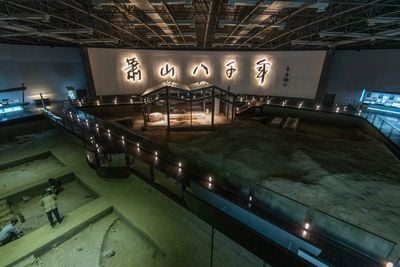
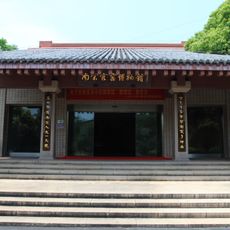
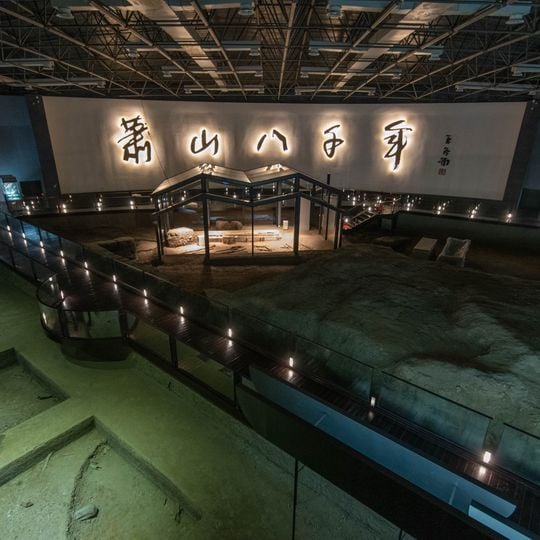
Kuahuqiao is a nationally protected archaeological site in Hangzhou, China, located near the Qiantang River. The excavations have uncovered the remains of stilt villages built on swampy ground, along with tools, pottery, plant remains, and animal bones.
The site came to light in the 1970s during construction work for a brick factory, and the remains were dated to around 5000 BCE. Further excavations confirmed that the people who lived here had already established a settled way of life and were farming the land.
The objects found at Kuahuqiao, including stone tools and bone implements, show how closely daily life was tied to the water and wetlands around the settlement. Visitors can see how people shaped local materials into tools and how rice farming was already part of their routine.
The ground around the site can be wet and uneven, so sturdy footwear is a good idea before heading out. A visit during drier months tends to make moving around the area more comfortable.
One of the oldest known dugout canoes in the world was found here, pointing to early skills in shaping wood for water travel long before similar finds elsewhere. The same site also yielded traces of peach cultivation, suggesting that fruit trees were being grown intentionally at a very early stage.
The community of curious travelers
AroundUs brings together thousands of curated places, local tips, and hidden gems, enriched daily by 91,812 contributors worldwide.