Fengshan Gate, Cultural gate in Zhejiang, China
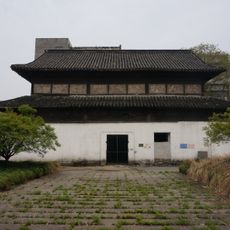
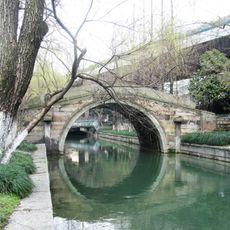
Fengshan Gate is the surviving water gate of Hangzhou's Ming-Qing city wall, at the foot of Phoenix Hill. Its single arch is built of three stone rings joined end to end: the north ring 3.07 m high with a 5.65 m span, the middle 3.47 m high, the south 2.14 m high with a 4.22 m span and a square slot that once held a sluice gate. The parapet and battlements above were rebuilt in 1986.
Zhang Shicheng rebuilt Hangzhou's walls in 1359 and opened Hening Gate on the south side, with a land gate west and a water gate east over the Zhong River. The Ming renamed it Fengshan Gate after the Phoenix Hill outside. The land gate was demolished with the south wall in the Republican era; only the stone water arch remains, restored in 1986.
A local rhyme counted ten Ming-Qing city gates, and "horses gallop outside Zhengyang Gate" referred to Fengshan Gate: the slopes of Phoenix Hill and Wansongling outside were long used for riding and spring outings, while horse stables stood inside the gate. The gate's name comes from Phoenix Hill outside the wall; because it was the city's only south gate in Ming and Qing times, people called it Zhengyang Gate.
The water gate stands in Fengshui Gate Park on the Zhong River, together with Liubu Bridge, the "Ancient Fengshan Gate" landmark stele and the "Yinhe Shuangluo" monument. The single arch is a triple stone vault: the north and middle arches span 5.65 m, the south arch 4.22 m. The walls, parapet and battlements above were rebuilt in 1986.
The water gate's single arch is built from three stone rings joined end to end: the northern ring is 3.07 m high with a 5.65 m span, the middle 3.47 m, and the southern 2.14 m with a 4.22 m span. A square groove in the southern ring once held the gate's sliding mechanism; the gate stones and leaves are gone.
The community of curious travelers
AroundUs brings together thousands of curated places, local tips, and hidden gems, enriched daily by 94,104 contributors worldwide.