Former Residence of Zhou Enlai's Ancestors, Ming Dynasty ancestral residence in Yuecheng District, China.
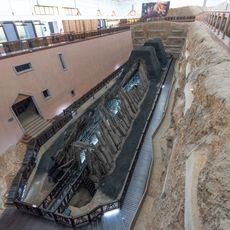
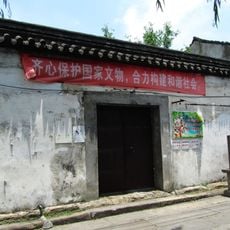
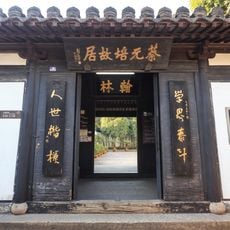
The Former Residence of Zhou Enlai's Ancestors is a Ming- and Qing-style Shaoxing taimen compound facing south on Laodong Road, built possibly by Zhou Yi, fifth-generation member of the Baoyouqiao Zhou clan. It is divided into east, central and west routes; the central route has four successive halls — the main gate, a brick-carved second gate, the Baisui Hall and a rear building — each three bays wide except the second gate. The west route holds the Songfen Hall, a small hall with family school and study, and a kitchen; the east route now houses exhibition rooms, with a rear garden to the north.
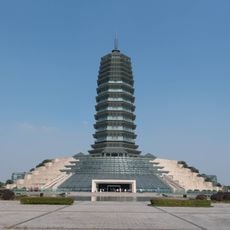
The compound is a Ming-Qing style Shaoxing taimen, possibly built by Zhou Yi, fifth-generation member of the Baoyouqiao Zhou clan. In March 1939, Zhou Enlai stayed here, received local figures and relatives, wrote anti-Japanese inscriptions, and updated the family genealogy. It opened as the Zhou Enlai Memorial Hall in 1984; a memorial square with his bronze statue was added to the south in 1998, and exhibition and remembrance halls to the east in 2001.
The compound's name comes from the Baishou Hall, originally Xiyang Hall, where the Zhou clan held ancestral ceremonies and clan meetings. The hall was renamed after the Kangxi-era plaque "Gate of the Hundred-Year-Old Mother", granted when Zhou Maozhang's wife Wang reached one hundred. The west wing held the family school and study.
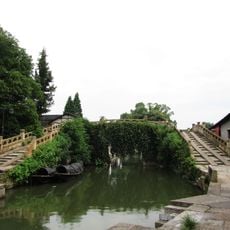
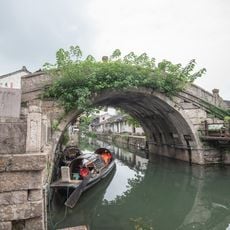
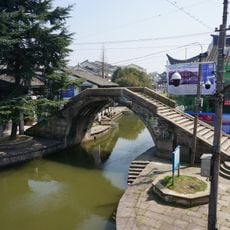
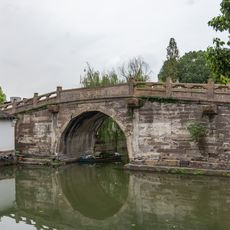
The residence stands at 369 Laodong Road in Yuecheng District, on the site of the old Baoyou Bridge riverbank. Enter from the south-facing main gate and follow the central axis through the gate, the brick-carved second gate, Baisui Hall and the rear hall; the west route holds the family school and kitchen, while the east route now serves as exhibition rooms with a rear garden to the north.
The compound's name comes from a plaque the Zhejiang governor awarded in 1698, when Zhou Maozhang's wife Wang reached the age of one hundred; it hung above the second gate. The Bai Sui Tang, originally Xiyang Tang, was the hall where the Zhou clan held ancestral ceremonies and deliberations.
The community of curious travelers
AroundUs brings together thousands of curated places, local tips, and hidden gems, enriched daily by 94,631 contributors worldwide.