Botou Mosque, Mosque in Botou, Hebei, China
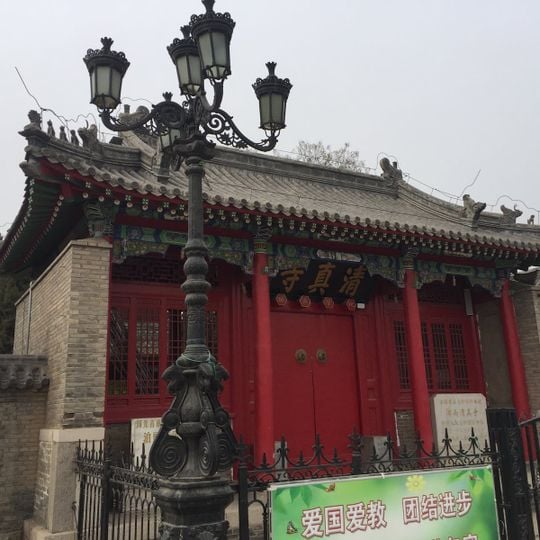
Botou Mosque is a nationally protected historical site built with the traditional Chinese material glue-size and arranged in a symmetrical layout with three courtyards. The main prayer hall sits at the back of the grounds, accessed through a primary gate that faces east and is modeled after Beijing's Meridian Gate.
The mosque was built during the Ming Dynasty and has stood for several centuries as a witness to Islamic history in China. It emerged during a period when communities from Central Asia and the Middle East merged their architectural ideas with local traditions.
The mosque is the main place of worship for Botou's Hui community, whose presence in the town dates back to the Yuan Dynasty. The complex is divided into a main mosque and a separate women's mosque with its own prayer hall, a division visitors can see on the ground. The name Botou Mosque replaced the earlier name Bozhen Mosque, under which it was listed as a provincial heritage site in 1982.
Admission is free and the grounds are open from early morning until evening, with guides available on-site to explain the architecture and history. Visitors should wear respectful clothing and show appropriate behavior to maintain the quiet and reverent nature of this place.
The mosque was listed as a Hebei provincial cultural relic on 23 July 1982 under the name Bozhen Mosque, before gaining national protection in 2001. It is the oldest and largest surviving mosque in Hebei, with about 3,000 square metres of floor area across more than twenty buildings.
The community of curious travelers
AroundUs brings together thousands of curated places, local tips, and hidden gems, enriched daily by 93,848 contributors worldwide.