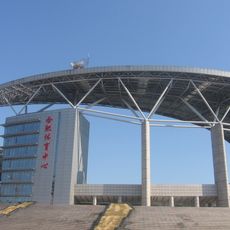
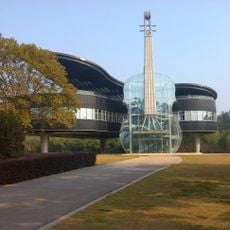
Anhui Paleontology Fossil Museum, Paleontological museum in Hefei, China.
The Anhui Paleontology Fossil Museum is a collection of fossils, minerals, and gemstones displayed across large exhibition halls. The galleries cover different topics ranging from Earth history to modern resources.
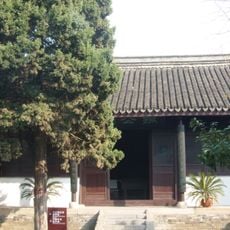
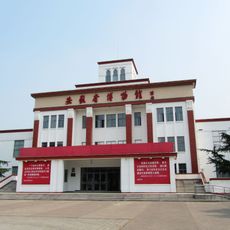
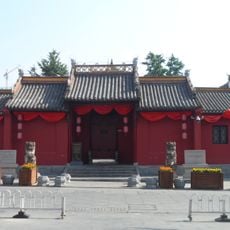
The museum was founded in 1986 and was originally located at 239 Wuhu Road in the Baohe District of Hefei, in a 1,460-square-metre building with a traditional hip roof. On 10 October 2012 it moved to a new 26,495-square-metre building at 999 Jiahe Road in the city's government and cultural district. At its opening it was the largest geological museum in the People's Republic of China.
The museum displays fossils found in the Anhui region, connecting local Earth history with the evolution of life on the planet. Visitors can trace how the landscape and living forms developed over millions of years.
The new building on Jiahe Road in the Zhengwu Cultural New Area shares the Anhui Culture and Museum Park with the new Anhui Museum. Its six halls run from the introductory hall and Earth hall to the life evolution, mineral and rock, resources and environment, and dinosaur halls, with a 4D science cinema. The exhibition area covers 16,902 square metres.
The museum holds a fossil of the Early Triassic Chaohusaurus, an ichthyosaur from the Chaohu area, not a sail-backed reptile. Its other notable specimens include dinosaur eggs from southern Anhui, dinosaur bones and footprint traces, and the province's only stone and iron meteorites.
The community of curious travelers
AroundUs brings together thousands of curated places, local tips, and hidden gems, enriched daily by 93,273 contributors worldwide.