Wuyi Palace, temple in Fujian
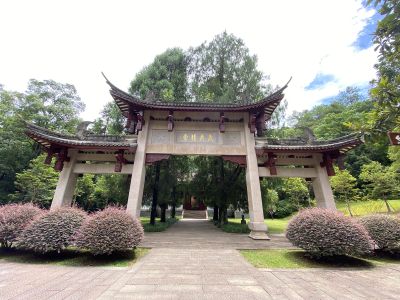
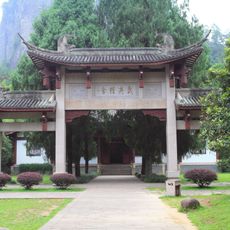
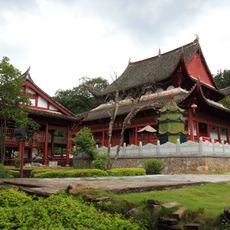
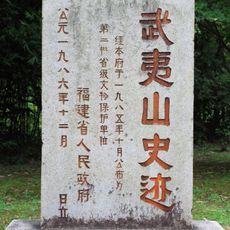
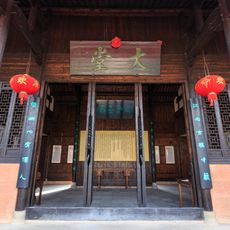
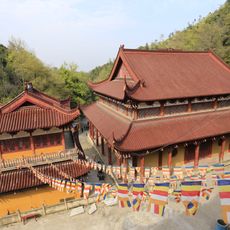
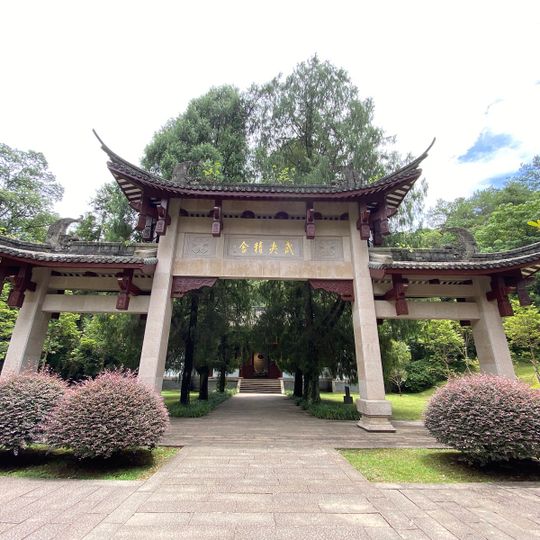
Wuyi Palace (Wuyi Gong) stands at the southern foot of Wuyi Mountain in Fujian, at the entrance to the Wuyi Shan scenic area. Its surviving buildings include the Wannian Hall, the Taoist Trinity Hall (Sanqing Hall), and two ancient dragon wells; two cassia trees over 800 years old grow on the grounds. The halls use timber columns and curved roof tiles in the local Minbei style.
Founded in 742–755 under the Tang as a shrine to Wuyi Jun, the palace was rebuilt and enlarged in 1086–1094 during the Song, when it covered over 300 bays and ranked among the empire's nine great Taoist temples. Most halls were destroyed in later wars; the present Wannian Hall and Trinity Hall are Ming and Qing reconstructions.
The name Wuyi Palace (Wuyi Gong) comes from the Han-dynasty tradition of worshipping the mountain's guardian deity, later honoured as Saint Wuyi. The Wannian Hall now serves as a small museum of Wuyi culture, displaying tea-processing tools and historical objects from the area. Visitors can also see the two Song-dynasty cassia trees beside the hall, which local people regard as witnesses to the site's long history.
Wuyi Palace sits at the southern foot of Wuyi Mountain, at the entrance to the Wuyi Scenic Area, near the Song Street commercial strip in Wuyishan. Visitors walk between the Wannian Hall, the two dragon wells and the cassia trees on level ground. The site is reached by local bus or taxi from Wuyishan city; the nearest larger transport hub is Wuyishan North railway station.
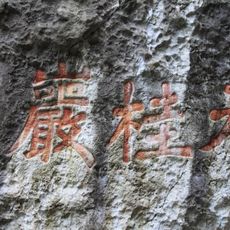
The two cassia trees on the grounds were planted during the Song dynasty and are over 800 years old, making them living witnesses to the site's long history. These ancient trees survived all the reconstruction and changes that shaped the palace over centuries.
The community of curious travelers
AroundUs brings together thousands of curated places, local tips, and hidden gems, enriched daily by 94,051 contributors worldwide.