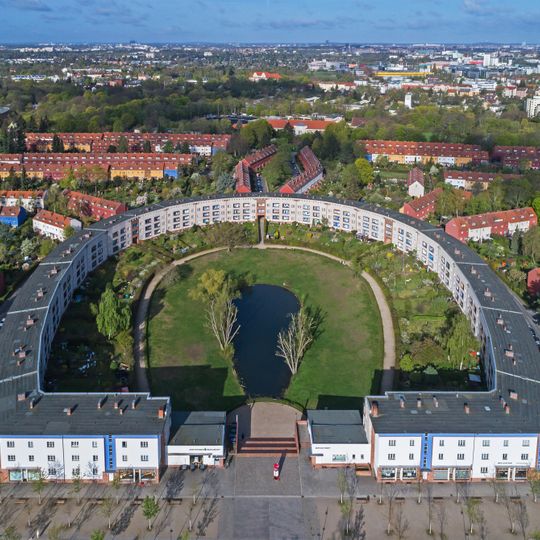
Berlin Modernism Housing Estates, UNESCO World Heritage housing estates in Berlin, Germany
Berlin Modernism Housing Estates are seven subsidized housing estates in Berlin, built between 1913 and 1934 in the New Objectivity style. The estates include the Gartenstadt Falkenberg, the Hufeisensiedlung Britz, the Weiße Stadt, and the Großsiedlung Siemensstadt. The Hufeisensiedlung features a horseshoe-shaped apartment block around an oval lawn with a pond, while other estates use flat roofs and light-colored facades.
These estates emerged in response to Berlin's rapid growth and the dire housing conditions for workers crammed into overcrowded buildings. They marked a turning point when modern planning and architecture aimed to create dignified living for working people.
The estates show how these designers imagined people living together: with playgrounds, parks, and shared spaces that brought neighbors closer. Rather than just building houses, architects created entire communities meant to improve daily life for ordinary families.
The seven estates are scattered across Berlin, so plan transport between them rather than treating them as one site. Gartenstadt Falkenberg, the oldest, lies in Bohnsdorf near the Grünau S-Bahn station; Siemensstadt is served by the U7 line. The estates are inhabited, so keep to public streets and respect residents' privacy.
Bruno Taut and Martin Wagner pursued different design approaches, so each estate has its own distinct character and feel. Walking from one development to another, you notice how differently these architects realized their visions.
The community of curious travelers
AroundUs brings together thousands of curated places, local tips, and hidden gems, enriched daily by 93,896 contributors worldwide.