Domnapf, Stone monument at Speyer Cathedral, Germany
The Domnapf is a flat, round sandstone basin nearly 2 m across, standing on an octagonal plinth of about 14 m² in the middle of the Domplatz, some 20 m west of the cathedral's main portal. Twenty sandstone columns, just over 1 m high, form a square around it. Stone reliefs of coats of arms decorate the outside, and a brass band with a Latin inscription rings the rim.
The Domnapf was probably built in 1294 and first documented in 1314; it was reshaped and given its Latin inscription in 1490. It marked the border between the Free Imperial City of Speyer and the prince-bishopric, serving as a place of asylum. French revolutionary troops removed it in 1794; after several relocations it returned to its original spot in 1989.
The sandstone bowl's Latin inscription of 1490, renewed in 1972, explains its use: when a newly elected bishop rode into the city with his retinue, he poured wine into it for the people. The last such filling under the prince-bishopric came in January 1611 for Philipp Christoph von Sötern; since 1930 the diocese has had it filled 15 times, including a Riesling from Frankweiler and Mußbach for the 2017 bicentenary.
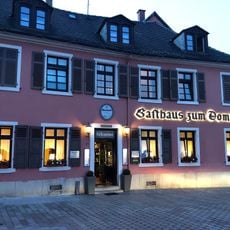
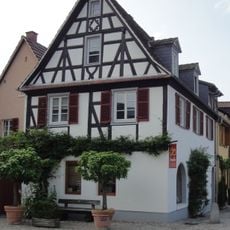
The Domnapf stands in the middle of the Domplatz, about 20 m west of the cathedral's main portal, on an octagonal sandstone platform of roughly 14 m². A square of 20 sandstone columns, just over 1 m high, surrounds the platform at a distance of 10 m. The square is paved and level, so the bowl can be circled on foot; the nearby inn Zum Domnapf takes its name from it.
The Domnapf served an unusual function beyond mere decoration: when a new bishop took office, the basin was filled with wine and citizens could partake in it. This tradition was a visible gesture connecting church authority with ordinary people.
The community of curious travelers
AroundUs brings together thousands of curated places, local tips, and hidden gems, enriched daily by 94,158 contributors worldwide.