St. Anne's tunnels, Mining museum and historic tunnels in Rhineland-Palatinate, Germany.
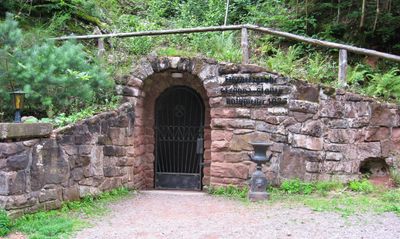
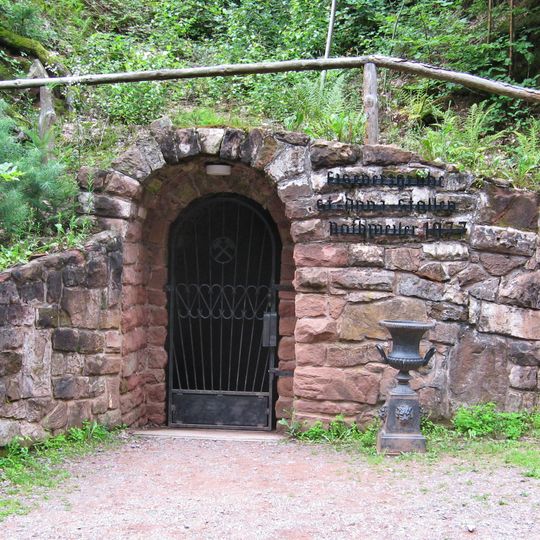
St. Anne's Tunnels are a show mine near Nothweiler in Rhineland-Palatinate. Of roughly 10,000 metres of hand-dug galleries, 420 metres are open to visitors, who can see a 40-metre-deep ore chute, an air shaft, a cistern and historic tools. Only iron ore was mined here, and its high manganese content gave the steel made from it great strength.
Iron ore was mined at Nothweiler from at least 1582, and the mine stayed tied to the ironworks at Schönau until it was abandoned around 1635 during the Thirty Years' War. Mining resumed in the 1760s and ran until 1810, when known reserves were exhausted. In 1829 the hill was reopened through the St. Anna tunnel, whose portal was completed in 1838; Ludwig von Gienanth bought the works in 1835, and mine and ironworks closed in 1883. The tunnel opened as a show mine on 22 July 1978.
The tunnels display tools and equipment that miners used in their daily work, showing how extraction methods shaped the lives of local workers. Walking through, you can see the marks and damage on the walls where picks and hammers struck the rock.
Visitors should wear sturdy shoes with good grip since the tunnel floors are uneven and can be damp in places. Bring a light jacket because the underground stays cool all year, and bring a sweater for extra comfort during the tour.
The tunnel holds a constant 8 °C with 80% humidity. The ore mined here was rich in manganese, which gave the steel made from it great strength. Visitors can also see a 40 m deep chute shaft where ore was thrown down to shatter against the walls.
The community of curious travelers
AroundUs brings together thousands of curated places, local tips, and hidden gems, enriched daily by 94,409 contributors worldwide.