Palais am Festungsgraben, Neoclassical palace near Neue Wache, Berlin, Germany
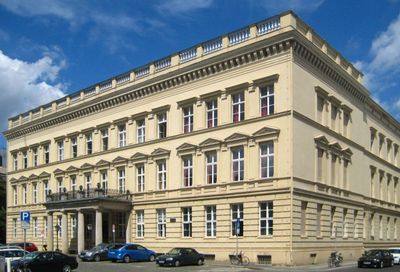
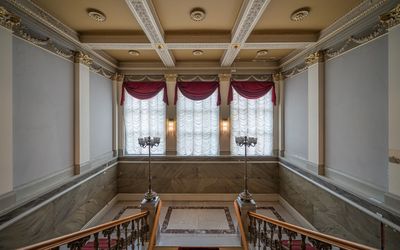
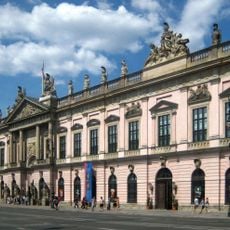
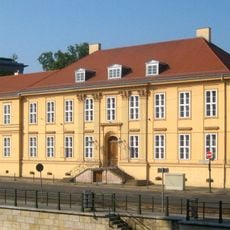
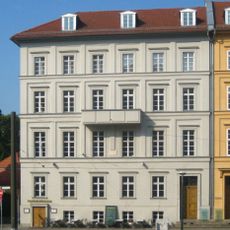
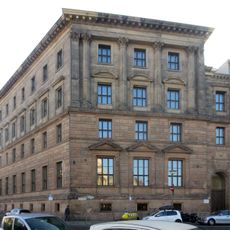
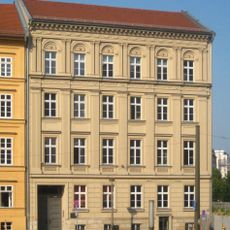
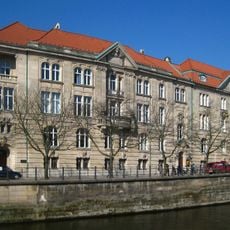
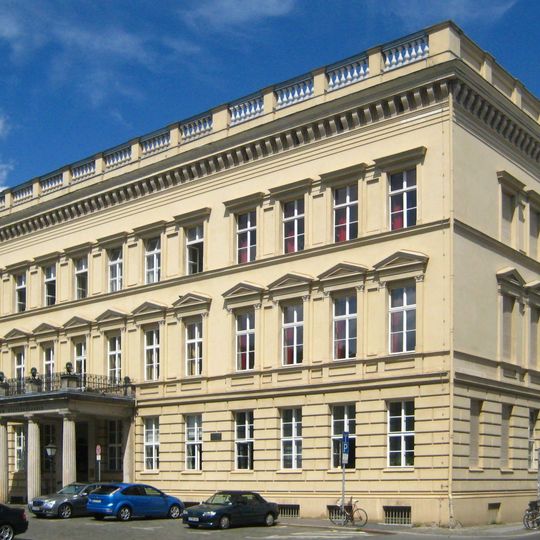
The Palais am Festungsgraben is a neoclassical palace of pale yellow stone, built 1751–1753 to plans by Christian Friedrich Feldmann. Its rusticated base carries two storeys of tall windows with triangular and segmental pediments, a columned entrance portico and a balustraded parapet with urns. Inside, the stair hall has a coffered ceiling with rosettes, marble wall panels and a carved wooden balustrade.
King Friedrich II of Prussia granted the land to his valet Johann Gottfried Donner in 1751, and architect Friedrich Feldmann constructed the building by 1753. After World War II, it was transformed into a center for Soviet cultural activities, establishing a new purpose for the property.
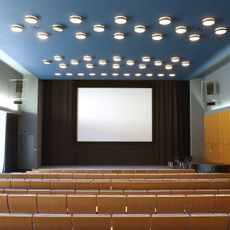
From 1947 the building opened as the House of Soviet Culture, and from 1950 to 1990 it was the central seat of the Society for German-Soviet Friendship. Today the ground floor holds the 99-seat Theater im Palais, founded in 1991, and since 2004 the Saarländische Galerie has used 200 square metres for contemporary art.
The Theater im Palais on the ground floor has 99 seats, and the Saarländische Galerie occupied 200 square metres of exhibition space from 2004. The building stands behind the chestnut grove of the Neue Wache, beside the Maxim-Gorki-Theater in the Sing-Akademie building. Access to the halls depends on the current theatre and gallery programme.
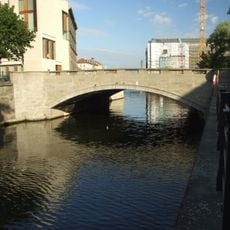
The moat that gave the palace its name was a side channel of the Spree, part of Berlin's 17th-century fortifications and later used for handling goods; it was filled in by 1883. The building was long called Palais Donner after Johann Gottfried Donner, the valet who received the plot from Friedrich II in 1751.
The community of curious travelers
AroundUs brings together thousands of curated places, local tips, and hidden gems, enriched daily by 93,252 contributors worldwide.