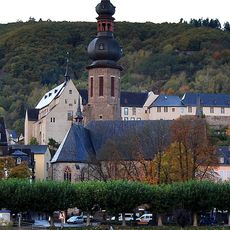
Martin city gate, Medieval city gate in Cochem, Germany
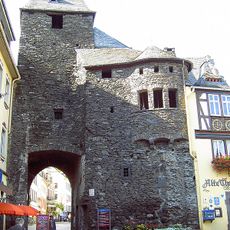
The Martin Gate is a fortified passage through the historic city wall of Cochem with stonework and distinct architectural details from the medieval period. The structure displays typical defensive features including a narrow opening that continues to shape the flow of movement through the old town.
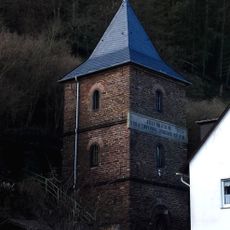
The gate was built in 1352 on the orders of Baldwin of Luxembourg, Archbishop of Trier and elector. It served as a toll gate: a chain stretched from the gate to the opposite bank of the Moselle to stop ships until duties were paid. Later, Louis Jacques Ravené, a subsequent owner, converted the smaller tower into an ice cellar.
The gate is named after Saint Martin and continues to shape the town's character as a link between the medieval center and modern expansion. Locals and visitors pass through it daily, experiencing how history remains woven into everyday life at this central crossing.
The gate sits at a major intersection in the old town and serves as a natural starting point for walking exploration. The narrow historic passage means vehicles must take alternate routes today, so foot traffic dominates and visitors experience the location without vehicular noise.
The gate retains the original medieval passage width, which is too narrow for modern vehicles to pass through, forcing traffic to bypass the old town center. This constraint has paradoxically helped keep the area quieter and allowed it to retain its historical character more naturally.
The community of curious travelers
AroundUs brings together thousands of curated places, local tips, and hidden gems, enriched daily by 93,224 contributors worldwide.