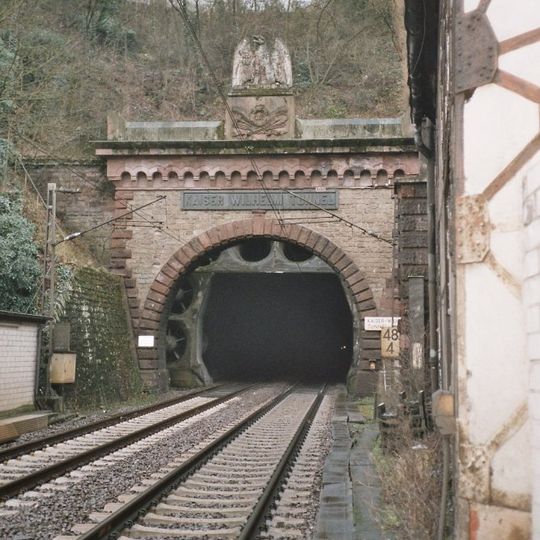
Kaiser-Wilhelm-Tunnel, Railway tunnel in Rhineland-Palatinate, Germany.
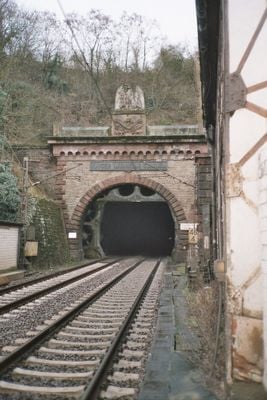
The Kaiser-Wilhelm-Tunnel is a railway passage carved through the rock of the Middle Rhine valley in Rhineland-Palatinate, connecting two sections of track. The bore runs for several hundred meters and allows trains to avoid otherwise steep and difficult terrain.
The tunnel was completed in 1879 as a remarkable engineering feat that allowed the railway to cross the steep Rhine valley more efficiently for its time. Over 140 years later, the structure remains in daily operation, showing the durability of its original construction.
The tunnel bears the name of Kaiser Wilhelm I and stands as a mark of engineering pride that brought the railway to the Middle Rhine in the 1800s. It remains part of daily rail traffic today, linking communities that would otherwise be more difficult to reach.
The tunnel is accessible by train since it remains an active part of the railway network in regular use. Visitors can view the outer entrances and surroundings even though traveling through the passage itself requires boarding a train.
When completed, this was one of the longest railway tunnels in Germany and required blasting techniques that were highly advanced for the time. Engineers had to contend with unexpected water flows, which added to the project's complexity.
The community of curious travelers
AroundUs brings together thousands of curated places, local tips, and hidden gems, enriched daily by 92,075 contributors worldwide.