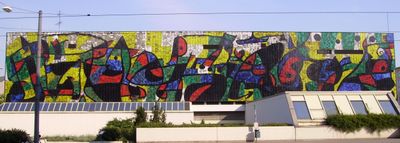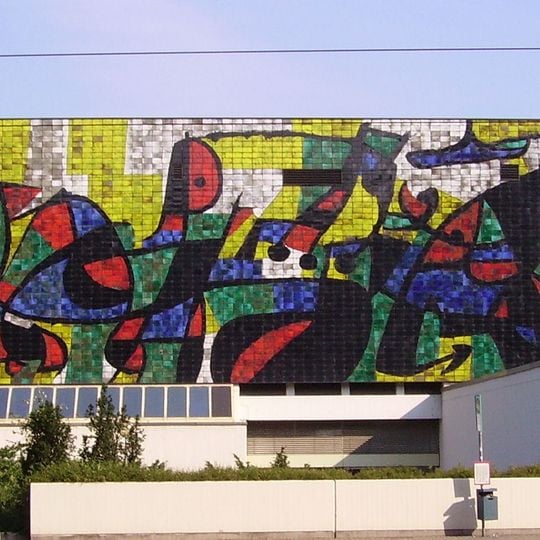
Miró Wall, Ceramic mural at Wilhelm-Hack Museum, Ludwigshafen, Germany
The Miró Wall is a large ceramic mural covering the front facade of the Wilhelm-Hack Museum in Ludwigshafen. It consists of thousands of colored tiles arranged in abstract patterns that span the entire width of the building's exterior.
The mural was designed in 1979 by a celebrated Catalan artist working with a specialized ceramicist to realize the vision. The two collaborated closely to scale the original sketch into this monumental artwork for the museum's new building.
The work bears the name of its Catalan creator and demonstrates how traditional ceramic craftsmanship from Spain connects with modern artistic expression. Walking along the facade, visitors encounter a visual language built entirely from colored tiles.
The mural is freely visible from the street and requires no museum admission, since it covers the exterior building facade in central Ludwigshafen. Daytime visits work best, as sunlight brings out the full range of colors in the tiles.
The 7,200 tiles were fired in Gallifa, a village near Barcelona, then carried down the mountain by mule, four tiles to a box, before lorries and trains covered the remaining 1,200 kilometres to Ludwigshafen. The wall has since discoloured from pollution and has not been cleaned because of the high cost.
The community of curious travelers
AroundUs brings together thousands of curated places, local tips, and hidden gems, enriched daily by 92,953 contributors worldwide.