Hochgrat, Summit in Allgäu Alps, Bavaria, Germany
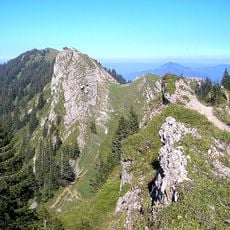
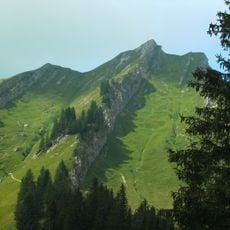
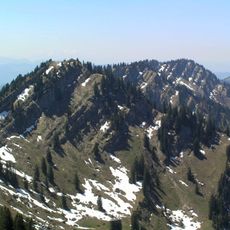
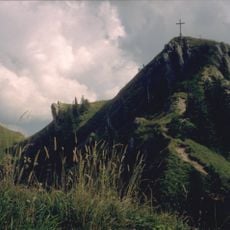
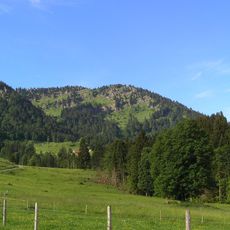
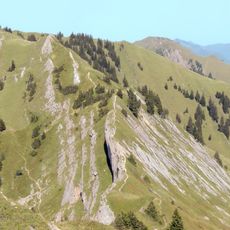
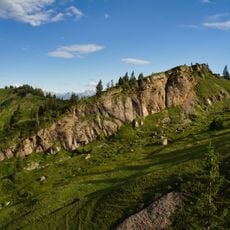
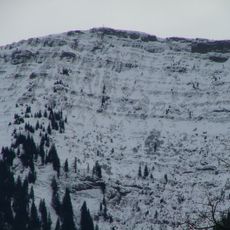
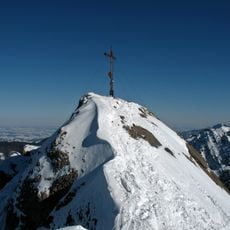
Hochgrat is an 1834 m summit in the Allgäu Alps, the highest point of the Nagelfluhkette and of the entire Allgäu foothills. Its layered conglomerate plates rise northward, and from the top the ridge descends symmetrically on both long sides before dropping steeply into saddles after about half a kilometre. A cross-ridge runs north from the summit.
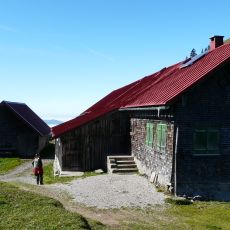
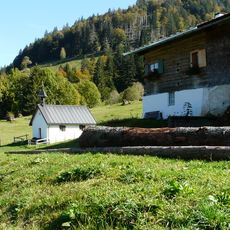
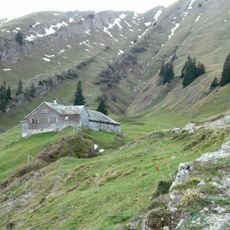
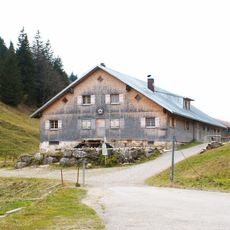
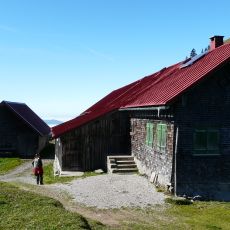
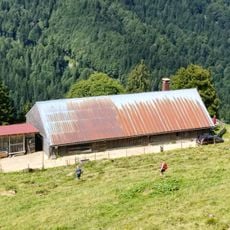
The mountain's south side was first used for farming from the Alpe Gelchenwang, when it was called Obergölchenwanger Grat. Until the 18th century the north side served mainly as a hunting ground; King Maximilian I is mentioned as a hunting guest in 1507. Pastures and forestry on the north flank followed in the 19th century, and the Staufner Haus was built in 1907–1908.
The mountain was long called Obergölchenwanger Grat, after the Alpe Gelchenwang on its sunny southern side where its economic use began; the name survives in the Gelchenwanger Kopf, a pre-summit of the Rindalphorn. On the north side the slopes served as a hunting ground until the 18th century, and King and later Emperor Maximilian I is recorded as a hunting guest in 1507.
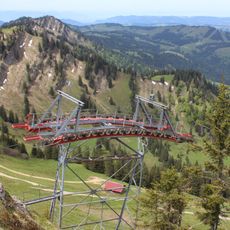
A cable car connects the valley to the upper regions, reducing the time needed to reach the peak. This allows visitors of different fitness levels to enjoy the mountain without spending hours hiking.
Hochgrat has the greatest geographic dominance of any Allgäu mountain: no summit of equal height stands within a wide radius. On clear days the view reaches the Zugspitze and the Großvenediger in the east, the Silvretta and Schesaplana in the south, and the Tödi and Säntis massifs in Switzerland.
The community of curious travelers
AroundUs brings together thousands of curated places, local tips, and hidden gems, enriched daily by 93,525 contributors worldwide.