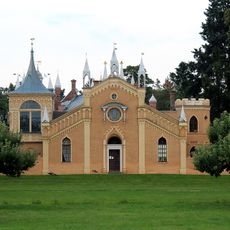
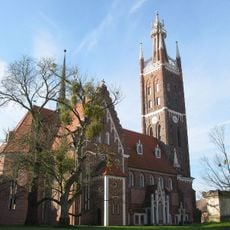
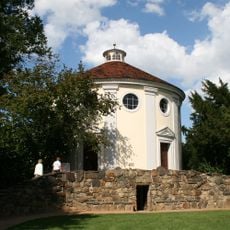
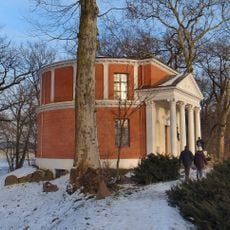
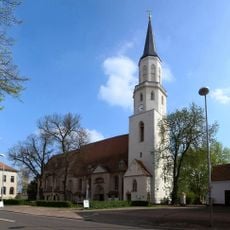
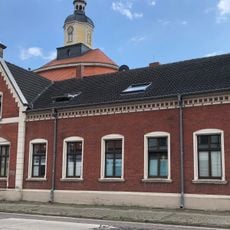
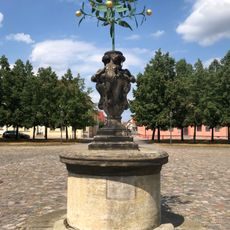
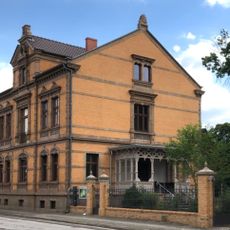
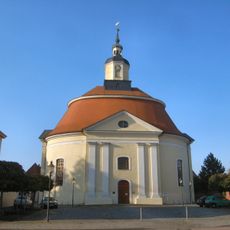
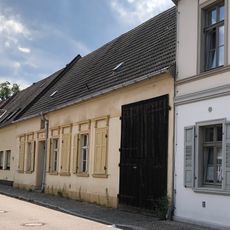
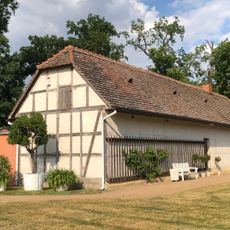
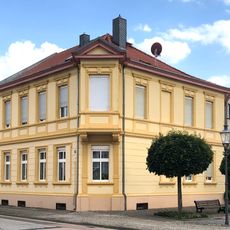
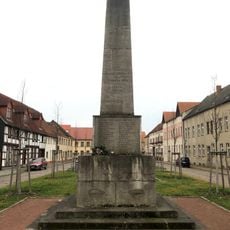
Wörlitzer Park, English garden in Oranienbaum-Wörlitz, Germany.
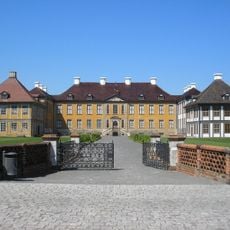
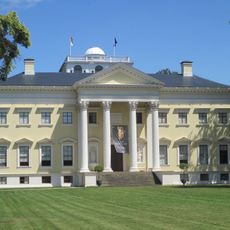
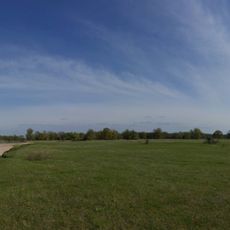
Wörlitzer Park is an English garden in Oranienbaum-Wörlitz that covers wide meadows, waterways, and wooded areas arranged around Lake Wörlitz. Five linked sections of the garden connect through canals, bridges, and paths lined with neoclassical buildings, temples, and pavilions scattered throughout.
Prince Leopold III Friedrich Franz of Anhalt-Dessau began laying out the garden in 1769, inspired by English gardens such as Stourhead, Stowe and Claremont that he had seen with architect Friedrich Wilhelm von Erdmannsdorff. Court gardener Johann Friedrich Eyserbeck designed the grounds, built from 1769 to 1773 and extended until 1813. A flood in 1770 damaged much of the unfinished layout, but work continued.
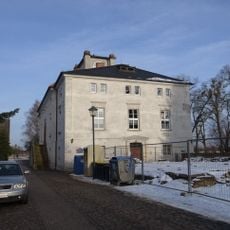
The garden is not named after Prince Franz but after the town of Wörlitz; it was laid out from 1769 for Leopold III Friedrich Franz of Anhalt-Dessau, who opened it and its buildings to all visitors. Only the Grey House and Rose Island stayed private, reserved for his wife Luise. Today the Grey House shows an exhibition on the duchess's life, and the synagogue houses a display on the history of Jews in Anhalt.
Visitors explore the grounds on foot, by bicycle, or through gondola rides on the water, with the boats running only during warmer months. Plan for several hours since the paths are long and the buildings spread far apart.
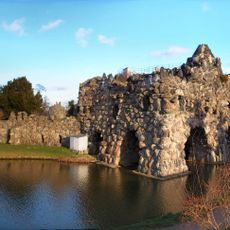
The Stein island in the park's eastern section holds Europe's only artificial volcano, its topography modelled on the Bay of Naples. At its foot stands the Villa Hamilton, which Erdmannsdorff built as a gesture of friendship for the British diplomat and antiquities collector William Douglas Hamilton.
The community of curious travelers
AroundUs brings together thousands of curated places, local tips, and hidden gems, enriched daily by 93,939 contributors worldwide.