Schloss Wilhelmshöhe, Neoclassical palace in Bad Wilhelmshöhe, Kassel, Germany
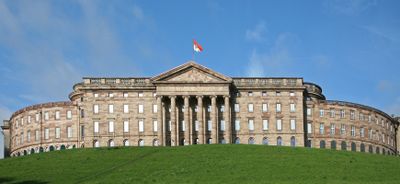
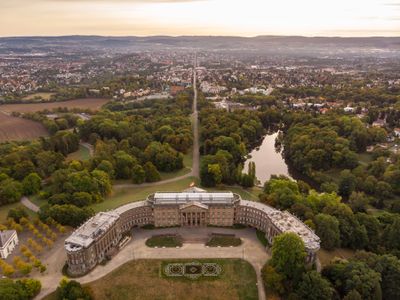
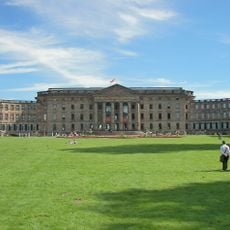
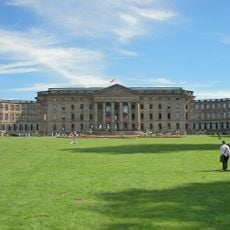
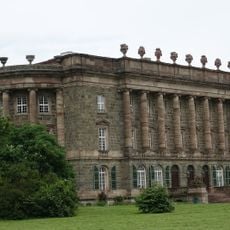
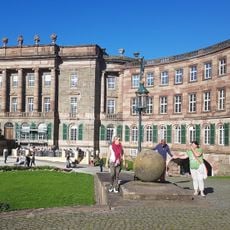
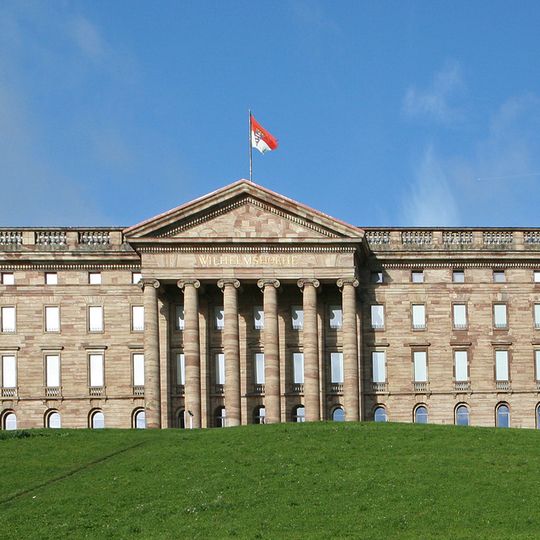
Schloss Wilhelmshöhe is a Neoclassical three-wing palace built from 1786 for Landgrave Wilhelm IX, its main facade facing west toward the park. The central block has a portico of six columns beneath a pediment inscribed WILHELMSHÖHE, and two curved connecting wings link it to the side wings. Since 1968 the central tract has been rebuilt as a museum, with a glass roof ridge replacing the destroyed dome.
The present palace was built from 1786 to 1798 for Landgrave Wilhelm IX to designs by Simon Louis du Ry and Heinrich Christoph Jussow, replacing a 1606–1610 hunting lodge on the site of a medieval monastery. During the Napoleonic occupation it was renamed Napoleonshöhe and served Jérôme Bonaparte as a residence after Kassel's city palace burned in 1811. From 1870 to 1871 Napoleon III was held here after Sedan, and from 1891 to 1918 it was the imperial family's summer residence.
The palace served as a residence for regional rulers and represents how aristocratic families displayed their wealth through art and architecture. Walking through it today shows how nobility lived and what they valued.
The palace is easily accessible by public transport and sits near parks where you can walk around the grounds. It helps to check in advance which exhibition areas are open on your visit day.
Napoleon III was held here from 5 September 1870 to 19 March 1871 after his capture at Sedan; his wife Eugénie visited him on 30 October 1870. Parts of the palace furniture later ended up in the Villa Hammerschmidt in Bonn.
The community of curious travelers
AroundUs brings together thousands of curated places, local tips, and hidden gems, enriched daily by 93,083 contributors worldwide.