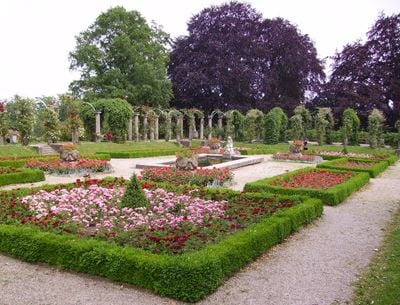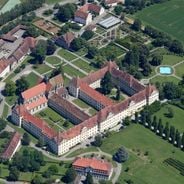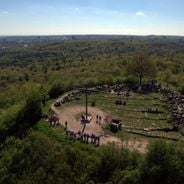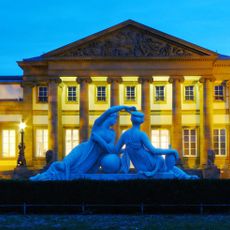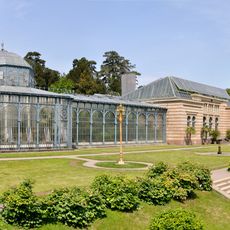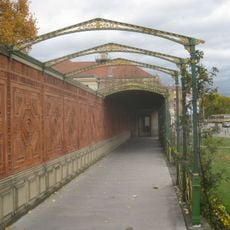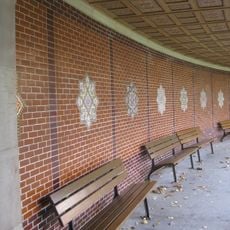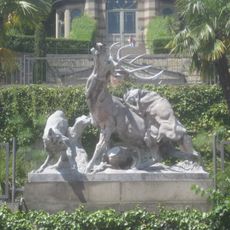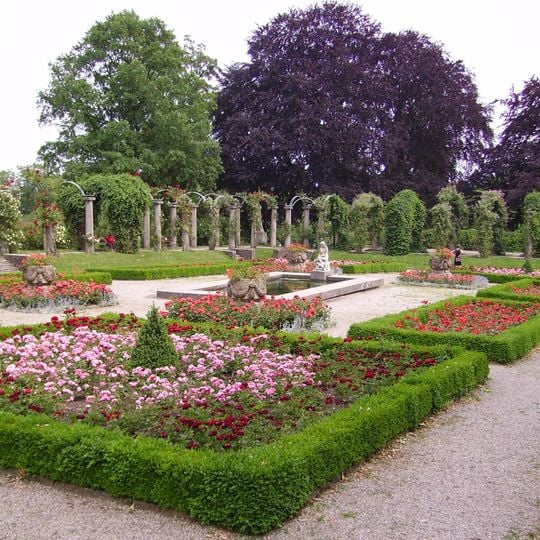
Rosenstein Park, English garden in Stuttgart, Germany.
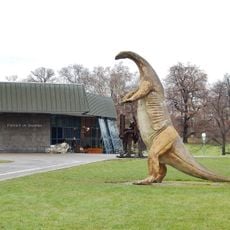
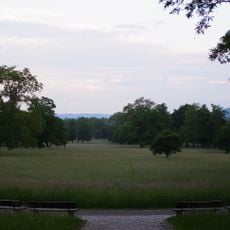
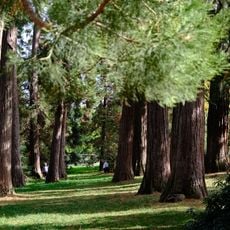
Rosenstein Park is an English landscape park laid out from 1824 to 1840 by court gardener Johann W. Bosch on the Kahlenstein ridge for King William I of Württemberg. Rosenstein Palace, built 1822 to 1830, stands at its centre, and the Wilhelma zoological-botanical garden and the Museum am Löwentor lie within the grounds. The Löwentor at the upper entrance carries a lion figure copied from Antonio Isopi's statue at the Neues Schloss.
King William I of Württemberg commissioned the creation of this park between 1824 and 1840, with landscape designer Johann Bosch shaping it according to English garden principles. The project developed during a period when Stuttgart was growing as a capital city and needed green spaces for its expanding population.
Rosenstein Palace, located within the grounds, once served as the royal residence and now functions as a museum where visitors can explore the region's heritage. The park itself remains a place where locals walk, jog, and spend leisure time as they have done for nearly two centuries.
The park is easily accessible with multiple entry points from the city center and welcomes visitors throughout the year, with early morning or late afternoon being the best times to explore. Visitors should wear comfortable shoes since the various sections are explored on foot and pathways vary in surface type.
Hunting is banned throughout Rosenstein Park, and this protection has produced 173 hares per square kilometre — the highest hare density in Germany. The figure comes from the state-owned park, which is also part of FFH area 7220-311 Glemswald and Stuttgarter Bucht.
The community of curious travelers
AroundUs brings together thousands of curated places, local tips, and hidden gems, enriched daily by 94,457 contributors worldwide.