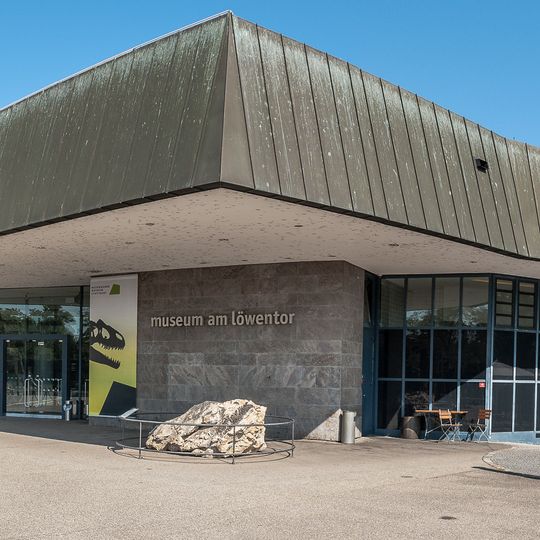
State Museum of Natural History Stuttgart, Natural history museum in Stuttgart, Germany.
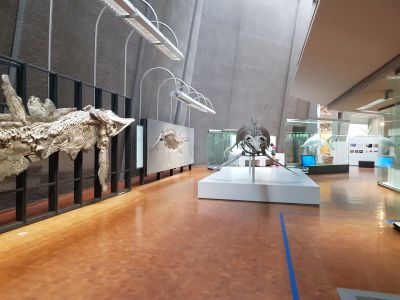
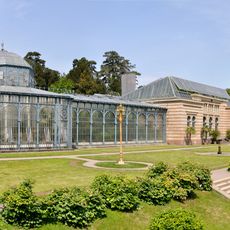
The State Museum of Natural History Stuttgart operates two exhibition buildings that collectively house around 12 million scientific objects, showcasing fossils, minerals, and biological specimens from various geological periods and habitats across the world.
Founded in 1791, the museum survived significant damage during World War II bombings, with many valuable specimens including a pliosaur and Plateosaurus fossils successfully recovered from the ruins and preserved for future generations.
The museum serves as an educational institution that promotes science literacy through guided tours, workshops for school groups, and interactive activities designed to engage visitors in understanding paleontology, biodiversity, and environmental conservation.
The museum opens from 9:00 a.m. to 5:00 p.m. Tuesday through Friday, and from 10:00 a.m. to 6:00 p.m. on weekends and holidays, with closures on December 24th, 25th, and 31st, and visitors are encouraged to purchase tickets online.
The museum displays the Steinheim skull, a 300,000-year-old hominid fossil discovered in the region, representing one of the oldest known early human remains found in central Europe and a centerpiece of its anthropological collection.
Location: Stuttgart
Inception: 1791
Website: https://naturkundemuseum-bw.de/en
GPS coordinates: 0.00000,0.00000
Latest update: November 28, 2025 08:47
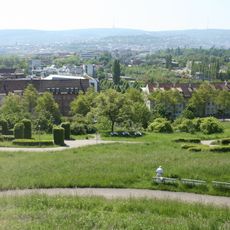
Stuttgart, the capital of Baden-Württemberg, features a blend of architectural and industrial heritage from the Middle Ages to modern times. The city hosts two car museums: the Mercedes-Benz Museum with 160 vehicles across nine floors, and the Porsche Museum tracing the brand's history since 1948. The historic city center is organized around Schlossplatz, dominated by the baroque New Castle from 1746, and Schillerplatz, where a bronze statue of the poet stands. The Old Castle, a former medieval fortress now housing a regional museum, is situated near modern structures like the municipal library, a nine-story white cube recognizable by its central atrium. Green spaces punctuate the urban fabric, from Killesberg Park to the castle gardens, while Feuersee, a former fire brigade pond from 1882, reflects the neo-Gothic St. John’s Church. The Market Hall of 1914, decorated with floral and geometric motifs, offers local produce and dining options. Worth a visit are the surroundings: Esslingen am Neckar preserves 200 medieval timber-framed houses and a 13th-century church dedicated to Saint-Denis, while Ludwigsburg Palace displays the baroque art of living in southern Germany.
Reviews
Visited this place? Tap the stars to rate it and share your experience / photos with the community! Try now! You can cancel it anytime.
Discover hidden gems everywhere you go!
From secret cafés to breathtaking viewpoints, skip the crowded tourist spots and find places that match your style. Our app makes it easy with voice search, smart filtering, route optimization, and insider tips from travelers worldwide. Download now for the complete mobile experience.
A unique approach to discovering new places❞
— Le Figaro
All the places worth exploring❞
— France Info
A tailor-made excursion in just a few clicks❞
— 20 Minutes