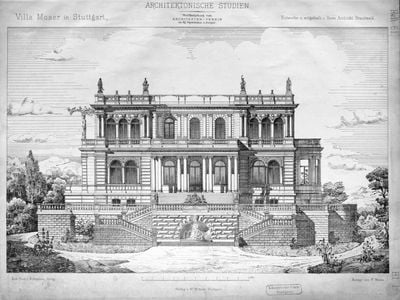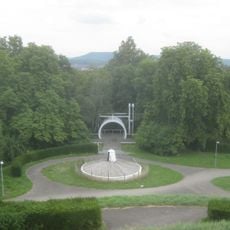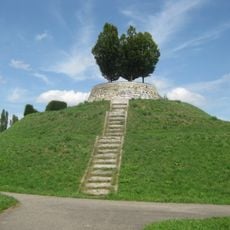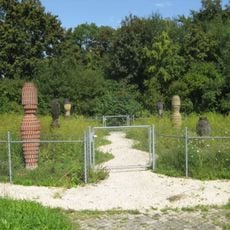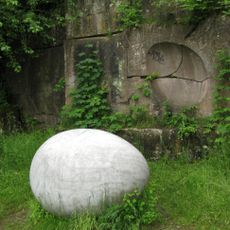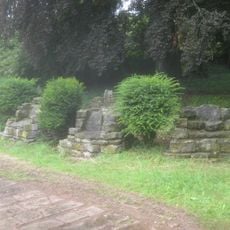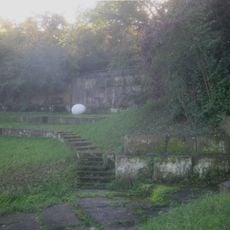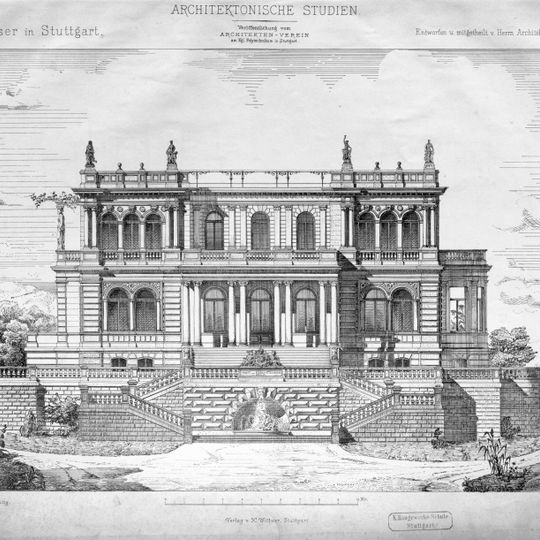
Villa Moser, Renaissance villa ruins in Leibfriedscher Garten, Stuttgart, Germany.
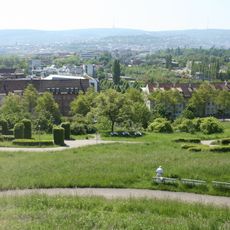
Villa Moser is the name given to the surviving foundations and stone walls of a former private residence in Stuttgart, set within a landscaped park with mature trees and sloping ground. The remains follow the original floor plan of the building and can be reached by pathways that wind through the terraced grounds.
The residence was built in 1875 by architect Johann Wendelin Braunwald for chocolate manufacturer Eduard Otto Moser as a family home. A bombing raid in 1944 destroyed most of the building, leaving only the foundations and lower walls standing.
In 1993, architect Hans Dieter Schaal laid out pathways through the ruins and turned the site into an art installation. Visitors can walk through the standing walls and see how the space works as a contemporary artistic intervention within the park.
The site is open to the public and reached by marked paths through the park. The ground is terraced with gentle slopes, so sturdy footwear is a good idea.
The symmetrical floor plan still visible in the ruins reflects the taste of wealthy 19th-century industrialists for ordered and harmonious spaces. Walking the paths allows visitors to trace the original layout of the house room by room.
The community of curious travelers
AroundUs brings together thousands of curated places, local tips, and hidden gems, enriched daily by 92,640 contributors worldwide.