Burg Blankenhorn, Medieval castle ruins in Güglingen, Germany
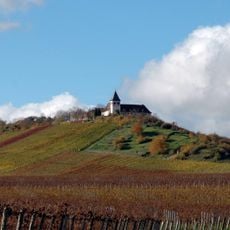
Burg Blankenhorn is a ruined hilltop castle on a wooded spur at 378.6 metres above sea level, south of Eibensbach in the Zabergäu. Its south side is protected by an 18-metre-high, 3-metre-thick shield wall of sandstone bossed ashlars, still the most striking part of the ruin. A simple round-arched portal on the west leads into the courtyard, where the four-storey palas abutted the shield wall; no bergfried was built.
Built around 1220–1230 as a Schildmauerburg and first mentioned in 1241, the castle belonged to the Lords of Neuffen, a Staufer ministerial family. Through inheritance it was split between the Neuffen and Magenheim families; Württemberg bought the Magenheim half in 1321 and held the whole castle by 1327. In 1472 it passed as a fief to Hermann von Sachsenheim, who let it decay; from 1479 forester Bartel Luz sold off its timber and tiles, and the ruin later served as a quarry.
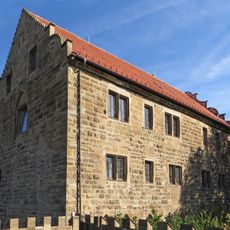
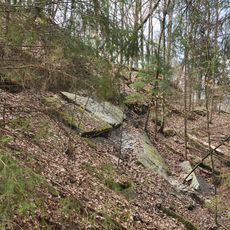
The ruins display building methods typical of medieval fortifications in this region. Visitors walking through the remains can observe the construction techniques used in that era.
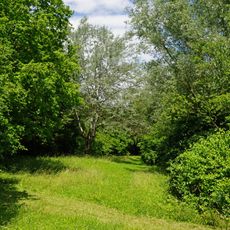
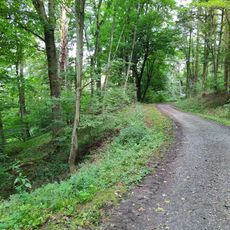
The ruin stands on a wooded spur at 378.6 m above sea level, south of Eibensbach, and is open year-round with no entrance fee. Two ditches cut it off from the Stromberg massif to the south. A covered barbecue area has been set up inside the courtyard.
The castle had no keep or bergfried; its defence rested on an 18-metre-high, 3-metre-thick shield wall of sandstone bossed ashlars, still the most striking part of the ruin. On the hill side of the inner ditch, a sloped escarpment wall supports the ground and formed an extra obstacle, a feature found at only a few medieval castles.
The community of curious travelers
AroundUs brings together thousands of curated places, local tips, and hidden gems, enriched daily by 93,785 contributors worldwide.