Mönchehaus-Museum für Moderne Kunst, Contemporary art museum in Goslar, Germany.
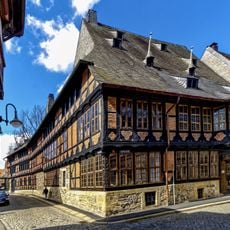
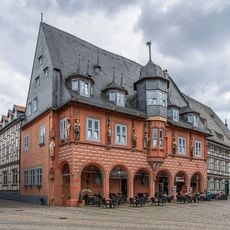
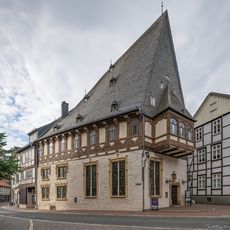
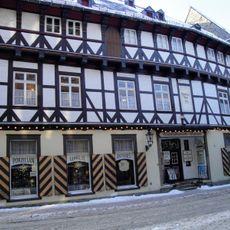
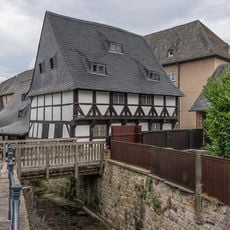
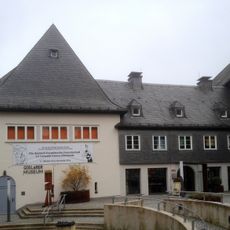
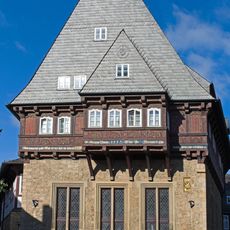
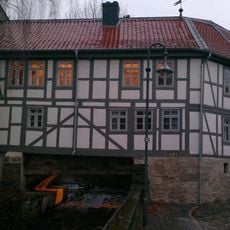
The Mönchehaus Museum für Moderne Kunst occupies a three-storey timber-frame Ackerbürgerhaus built in 1528 at Mönchestraße 1, restored in 2014 and part of the UNESCO World Heritage listing of the Rammelsberg mine, Goslar's old town and the Upper Harz water system. Its rooms and sculpture garden hold works by Rebecca Horn, Christo & Jeanne-Claude, Victor Vasarely, Joseph Beuys and Ilya Kabakov, and vaulted cellars with an Anselm Kiefer installation are reached from the garden.
The building was constructed in 1528 and served as one of the largest residential houses in Goslar for centuries before being converted into a museum. Its transformation into a contemporary art museum occurred in the late twentieth century, turning the historic structure into a center for modern artistic expression.
The name Mönchehaus refers to the monks of the nearby Neuwerkskloster, not to a resident family. Since 1978 the Verein zur Förderung moderner Kunst has run the museum and since 1984 has awarded the Kaiserring-Stipendium to young artists such as Helene Appel and Julian Charrière. The annual Kaiserring exhibition presents the prizewinner's work in the historic rooms.
The museum is easily walkable from Goslar's historic town center, with the entrance located on the street side of the timber-frame building. Plan to spend time exploring its rooms carefully, as the spaces are compact and exhibitions are thoughtfully arranged.
The Kaiser Ring is awarded by the city of Goslar, not by the museum; the Verein zur Förderung Moderner Kunst, founded in 1974, organises the winner's exhibition at the Mönchehaus. Since 1984 the same association grants a Kaiserring scholarship to young artists, among them Volker Bartsch in 1988.
The community of curious travelers
AroundUs brings together thousands of curated places, local tips, and hidden gems, enriched daily by 94,291 contributors worldwide.