Imperial Palace of Goslar, Medieval palace in Goslar, Germany
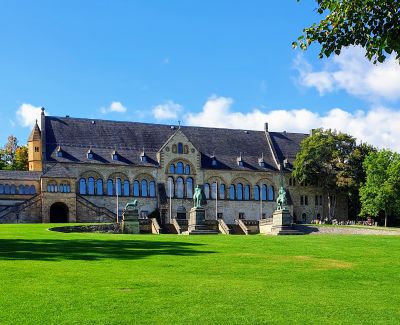
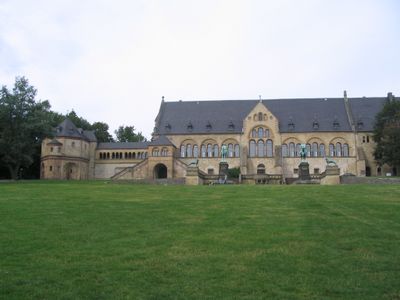
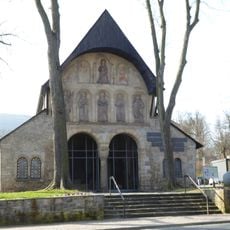
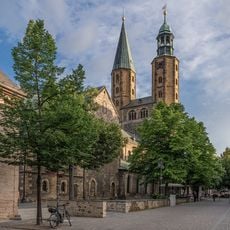
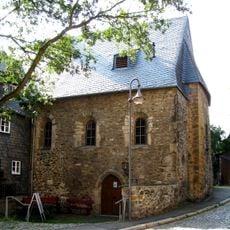
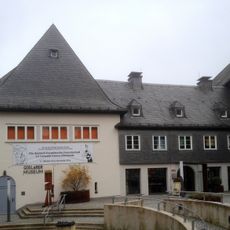
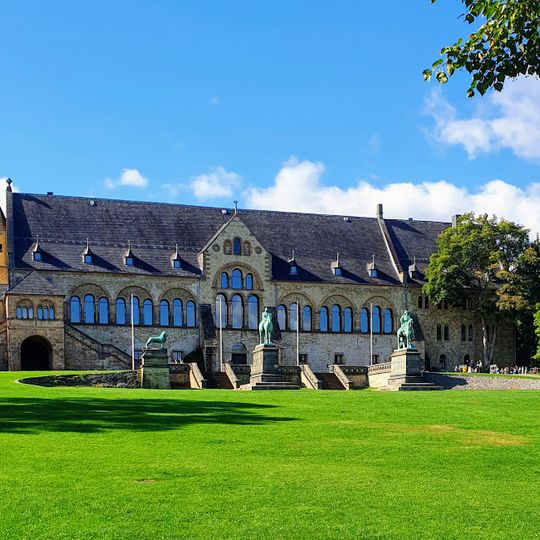
The Imperial Palace of Goslar is a Romanesque complex at the foot of the Rammelsberg, dominated by the Kaiserhaus, a 54-metre-long, 18-metre-deep hall building. Its two-storey hall held rooms 47 metres long and 15 metres wide, the upper one opening east through six large arched windows. A 19th-century arcade links it to the double chapel of St. Ulrich; of the collegiate church of St. Simon and St. Jude only the north porch survives.
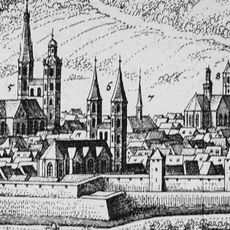
German emperors and kings occupied this complex between 1040 and 1253, holding major assemblies there. The site lost its political role after the mid-13th century when forms of governance in the realm shifted.
The chapel preserves the heart of Emperor Henry III beneath a memorial stone within its Romanesque walls. This space reminds visitors of the close bond between secular authority and religious life in medieval times.
The Kaiserhaus stands on the western edge of the palace district, with the 19th-century arcade linking it southward to St. Ulrich's Chapel. The ground plan of the demolished collegiate church of St. Simon and St. Jude is traced in the paving of the car park opposite. The site lies at the foot of the Rammelsberg, south of Goslar's old town.
The imperial throne stood in the seven-metre-high upper hall, set against the closed west wall, while the east wall's unglazed windows looked out over the whole palace district and the collegiate church opposite. The hall collapsed in 1132 and was at once rebuilt, with a cross-section added over its full height.
The community of curious travelers
AroundUs brings together thousands of curated places, local tips, and hidden gems, enriched daily by 93,975 contributors worldwide.