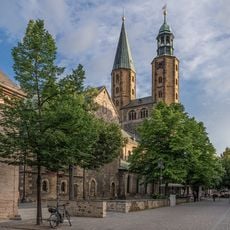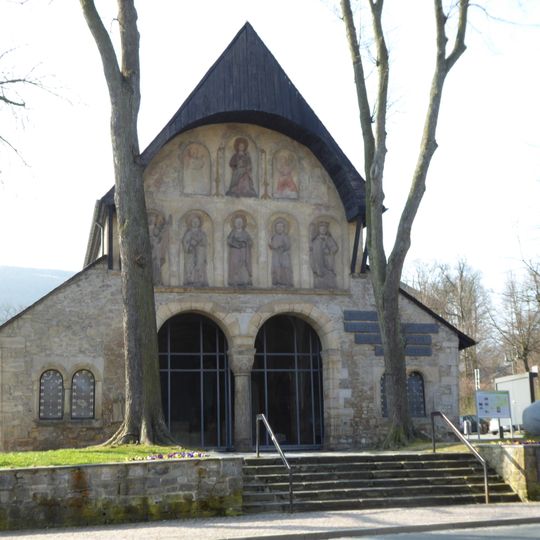
Goslar Cathedral, Romanesque collegiate church in Goslar, Germany
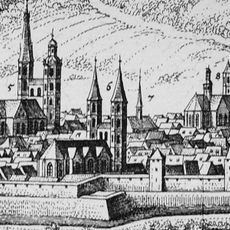
Goslar Cathedral was a Romanesque three-nave basilica with two octagonal towers and three eastern apses, constructed from carefully dressed limestone blocks. The structure followed the layout typical of an imperial chapel and formed part of a larger palace complex.
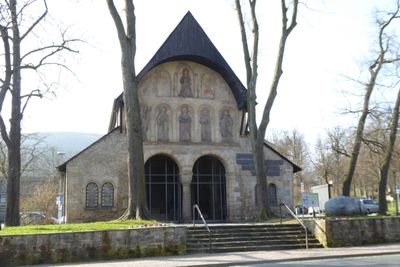
The cathedral arose between 1040 and 1050 as the focal point of the imperial residence area under Emperor Henry III. It was demolished in 1819, but the northern porch with its carved reliefs survived.
The cathedral's name references a local protective figure from pre-Christian traditions who was later Christianized into the religious narrative. Visitors today see how this site remains central to Goslar's memory of its imperial past.
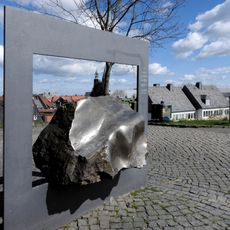
The only surviving section is the northern porch, which visitors can examine in the area of the former palace grounds. It is worthwhile to also visit the nearby St. Ulrich Chapel to gain a fuller understanding of the site's role in imperial history.
The heart of Emperor Henry III rests not in the cathedral itself but beneath a memorial slab in the adjacent St. Ulrich Chapel. This unusual burial connects two structures of the imperial complex in a deeply symbolic way.
The community of curious travelers
AroundUs brings together thousands of curated places, local tips, and hidden gems, enriched daily by 91,272 contributors worldwide.