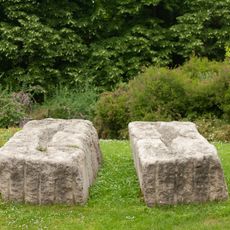
Tiergarten Nill, Cultural heritage zoo in Stuttgart, Germany
Tiergarten Nill was a private zoological garden in Stuttgart spanning approximately 9,500 square meters with custom-built enclosures and several ponds. The facility housed over 500 animals at its peak, including elephants, zebras, lions, monkeys, snakes, and tropical birds distributed across different sections.
Johannes Nill, a master carpenter, began exhibiting native animals in self-built cages at his Herdweg workshop in 1862. The success led him to open Nill's Tiergarten on 1 July 1871 with zoologist Gustav Jäger involved. In 1873 he acquired many exotic animals from the bankruptcy of Affenwerner, and the grounds expanded to 9,500 square metres by 1893. After Nill died in 1894, his son, veterinarian Adolf Nill, took over until the zoo closed on 16 April 1906.
In autumn 1881, Hagenbeck's Völkerschau of the "Feuerländer" took place in the zoo. In the 1890s, the animal tamer Claire Heliot performed with her twelve lions, and Käthe Paulus jumped with a parachute. On Sundays, up to 20,000 visitors were counted.
The zoo closed on 16 April 1906, so nothing of it remains; the grounds between Azenbergstraße, Seestraße, Relenbergstraße and Wiederholdstraße are now built over. From 1901 the electric tram's "Tiergartenlinie" terminated at Hölderlinstraße/Herdweg near the fork with Herdweg and Azenbergstraße. The lane Tiergartenweg, off Hölderlinstraße, still marks the former site.
The likely world-first captive breeding of a giant anteater was achieved by Adolf Nill, the veterinarian son who took over the zoo in 1894; he also bred great apes and ostriches. Gustav Jäger had helped found the zoo in 1871, not the anteater breeding.
The community of curious travelers
AroundUs brings together thousands of curated places, local tips, and hidden gems, enriched daily by 94,046 contributors worldwide.