Linden Museum, Ethnographic museum in Stuttgart, Germany
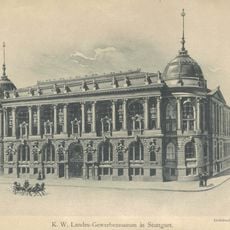
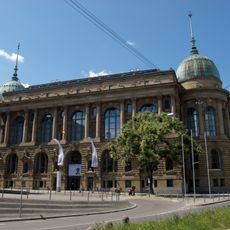
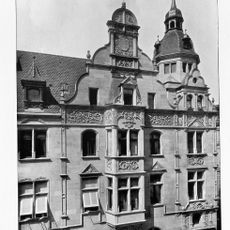
The Linden Museum is a state ethnological museum on Hegelplatz, housed in a neoclassical building completed in 1911 to plans by Georg Eser with the Stuttgart firm Bihl & Woltz. Its cream facade with a red tiled roof carries the lettering "LINDEN-MUSEUM"; a tower-like wing with a steep roof and small green cupola stands at the right corner. It holds around 160,000 art, ritual and everyday objects from Africa, the Americas, the Islamic Orient, South, Southeast and East Asia and Oceania.
The museum was founded in 1911 and grew from collections gathered during the 19th century by the Association for Trade Geography under Karl Graf von Linden's leadership. This collecting effort created the foundation for one of Europe's major ethnographic institutions.
The museum displays objects from Africa, Asia, America, and Oceania that offer insight into different ways of life and artistic traditions. Visitors can explore masks, sculptures, and everyday items that show how people in various cultures lived and worked.
The best time to visit is in the morning when the museum is less crowded and you can explore the exhibits without rush. The building has limited wheelchair accessibility, so visitors with mobility needs should check in advance which areas are accessible.
The museum holds Germany's largest Cameroon collection, once 16,670 inventory numbers, of which 8,871 remained in 2023. In July 2022 Germany transferred ownership of 1,100 artefacts held here and at four other museums to Nigeria, with a representative selection staying on long-term loan.
The community of curious travelers
AroundUs brings together thousands of curated places, local tips, and hidden gems, enriched daily by 92,801 contributors worldwide.