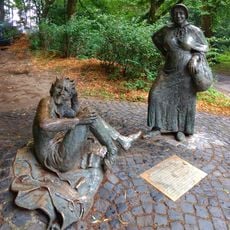
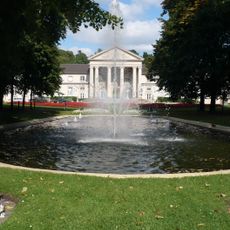
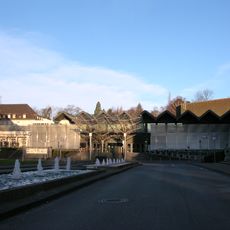
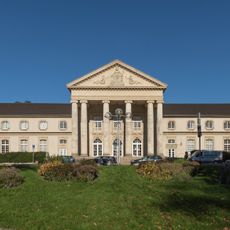
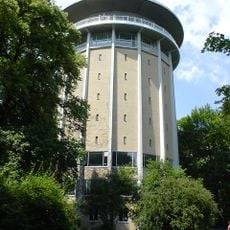
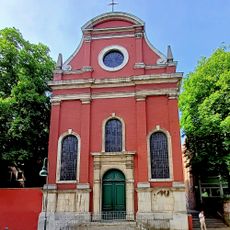
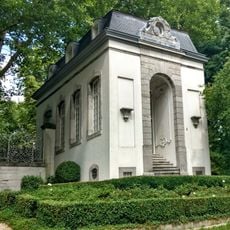
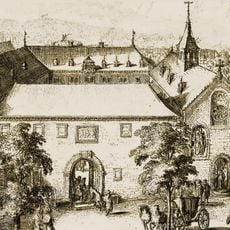
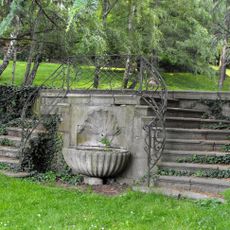
Müschpark, English garden in Aachen, Germany.
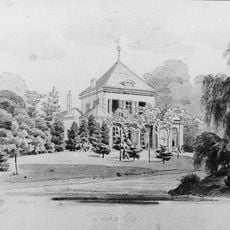
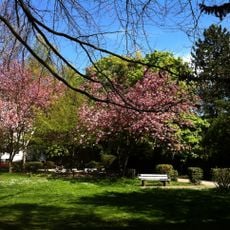
Müschpark is an 11-hectare landscape garden at the northern foot of the Lousberg in Aachen, laid out from 1803 as a ferme ornée. Its ponds, including small ones by the manor house and forest edge and a large one at the main entrance, were built for trout breeding and boating. Paths connect open and closed areas, with a chestnut and a horse-chestnut avenue and a conifer garden.
Wilhelm Körfgen, secretary-general of the French administration, acquired the Obere Müsch estate in 1803 and laid out the park as a ferme ornée between 1803 and 1814. In 1866 Eduard van Gülpen had it redesigned by Joseph Clemens Weyhe, son of Maximilian Friedrich Weyhe. Hans van Gülpen extended it westward from 1914, and the Order of the Daughters of the Holy Cross ran it as a convent garden from 1929 until the city of Aachen took it over in 2005.
The garden combines decorative farming with landscape design in ways that shaped Rhineland gardens. Walking through the open areas and structured paths shows how landscape and architecture work together.
Access is at the former main gate at the corner of Purweider Weg and Strüver Weg, and from the Buchenallee on the Lousberg. The almost 30 km long Weiße Weg, laid out for the Regionale 2008, runs from the Lousberg through the park on to Herzogenrath-Kohlscheid and Kerkrade.
The almost 30-kilometre Weiße Weg long-distance trail, laid out for the Regionale 2008, runs from the Lousberg through Müschpark and on via Herzogenrath-Kohlscheid to Kerkrade. The park was taken over by the city of Aachen in 2005 after the convent was dissolved, and in 2010 it was listed as a garden monument of particular importance for garden art in the Rhineland.
The community of curious travelers
AroundUs brings together thousands of curated places, local tips, and hidden gems, enriched daily by 93,625 contributors worldwide.