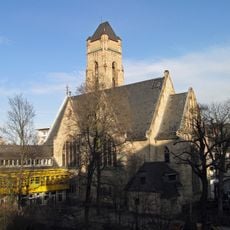
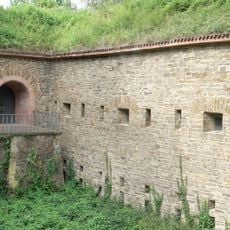
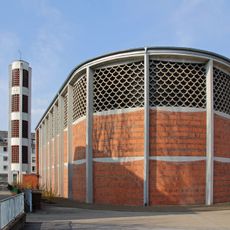
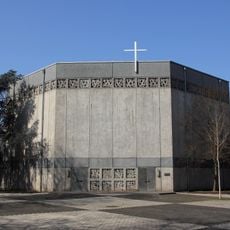
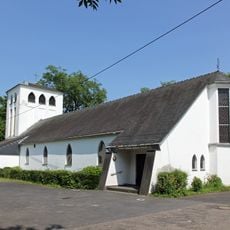
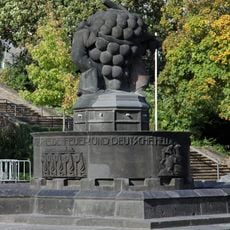
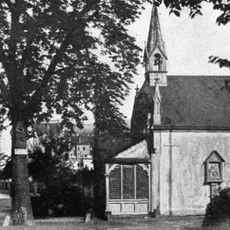
Kartause Koblenz, Carthusian monastery in Koblenz, Germany
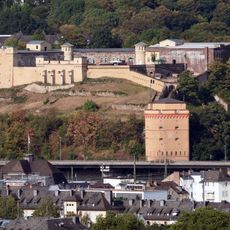
Kartause Koblenz was a Carthusian monastery built on elevated ground overlooking the city below. The complex included a church, individual monk cells, workshops, and supporting buildings arranged across the hillside.
Founded in 1331 by Archbishop Balduin of Luxembourg, the monastery became an important center of Carthusian life in the region. It closed in 1802 during the French occupation when secularization dissolved most religious communities.
The name Karthause, given to the hill and the modern district, comes from the Carthusians who lived here from 1331 to 1802. The monks also ran estates: in 1355 they bought a farm at Moselweiß, still known as the Kemperhof, and their town court "Zum Vogelsang" served as a refuge in wartime.
The site today is not freely accessible as it houses various public institutions including state archives and an educational facility. Those interested in the grounds should check for scheduled public visiting days or viewable areas from the perimeter.
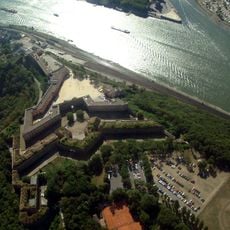
The 1720–1737 church was a three-aisled basilica with a polygonal choir end, not a hall church. The monks left in October 1794 for their town court Vogelsang; the buildings then served as a barracks, and a landlord opened a tavern and dance hall in the prior's house before demolition for Fort Großfürst Konstantin.
The community of curious travelers
AroundUs brings together thousands of curated places, local tips, and hidden gems, enriched daily by 94,389 contributors worldwide.