Hauptfriedhof Koblenz, Cemetery and cultural heritage monument in Koblenz, Germany.
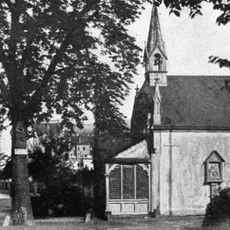
Hauptfriedhof Koblenz is a terraced cemetery and landscape park on the northern slope of the Karthause, covering about 36 hectares. Its historic core is dominated by an old plane-tree avenue aligned with a cemetery cross and the hexagonal cemetery chapel built by Johann Claudius von Lassaulx in 1821/22. The grounds rise steeply to the south, with paths and grave fields interwoven with dense greenery and evergreen shrubs.
This cemetery was founded in 1820 and introduced new approaches to urban burial management. It holds graves of notable figures like poet Max von Schenkendorf, giving it historical significance in the city.
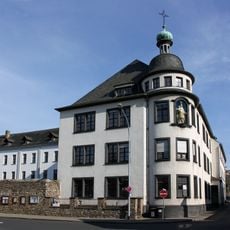
Near the entrance by the Beatusstraße administration building stand 18th-century gravestones moved here from Koblenz's old churchyards and the Löhrtor cemetery. The grounds hold few large tombs, little in the way of vaults and no burial chapels. Among the graves are those of publisher Karl Baedeker, poet Max von Schenkendorf and architect Ferdinand Nebel.
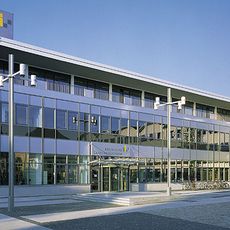
The main entrance and administration are at Beatusstraße 37 in Koblenz. The grounds climb steeply toward the Karthause, so paths and grave fields rise in terraces; expect gradients rather than level walking. The historic core is grouped around the old plane-tree avenue and the cemetery cross. A second, more modern hall stands at the upper Hüberlingsweg end.
Near the Beatusstraße entrance, gravestones from the 18th century stand along the path, moved here from Koblenz's old churchyards and the cemetery at the Löhr Gate. In sector 50, a grass plot on the slope holds the graves of 630 Soviet citizens who died in forced labour, marked by a stone erected on 4 March 1950.
The community of curious travelers
AroundUs brings together thousands of curated places, local tips, and hidden gems, enriched daily by 94,511 contributors worldwide.